Collateral damage
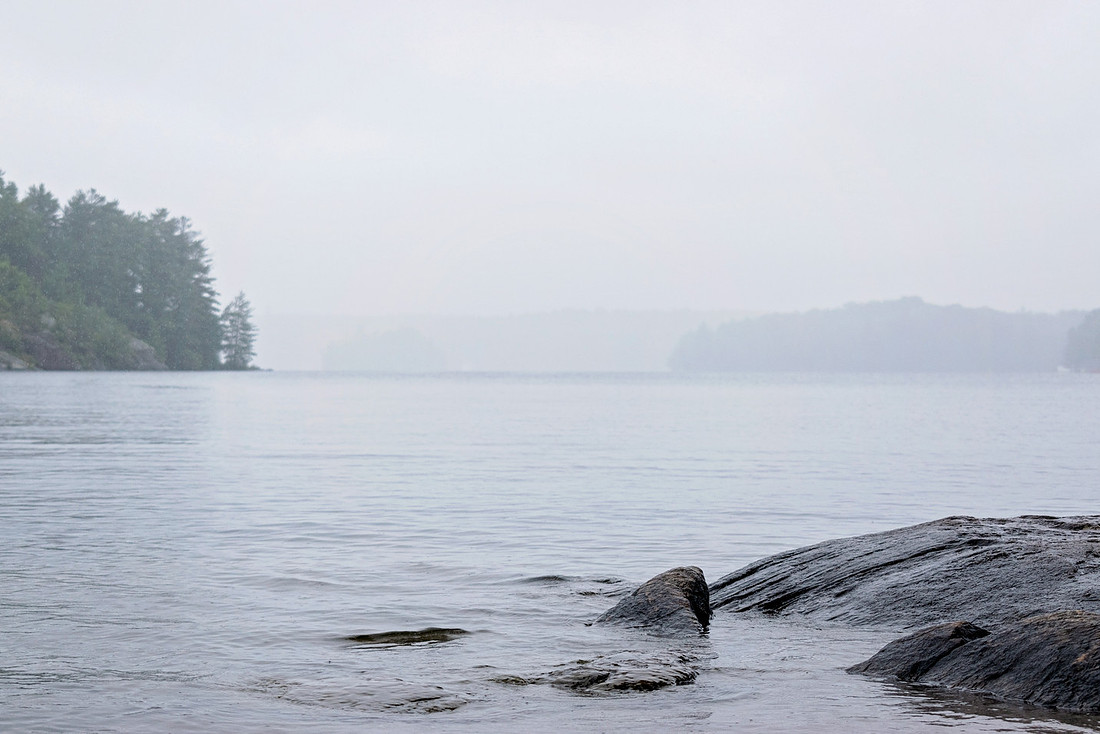

The summer is coming to an end, and I can't help but feel a certain bereavement, and not just in the traditional sense of the word.
In the abstract, there is the angst of letting go of summer itself, which is ingrained particularly firmly into this former teacher's spirit. For me, when the calendar turns from July to August, even though I've not set foot in a classroom for 7 years, there's still a reflexive gut-check, where I feel the momentum turn from carefree summer relaxation to prep and administration and steeling myself for the inevitable return to the classroom. It's akin to jumping into a cold lake, dread followed by commitment : August is the month of letting go - once September arrives, there is a brief moment of resignation and surrender, followed by a focus on the here-and-now and a welcome flow of positive energy as I would quickly hit my stride and adapt to the classroom and slip comfortably back into all of the routines of the new semester. By the second week of September, summer was a distant memory, a closed chapter.
I do not have that sea change any more, and so it is that September and October perpetuate the long goodbye to summer. Whether that's a good thing or a bad thing, I'm not sure. It's nice to enjoy the quiet, post-cottagers, and the weather can be beautiful, with the added bonus of a complete absence of the mosquitoes, black flies and deer flies that remind us that Muskoka is not quite heaven on earth. And of course the fall colours turn the landscape briefly into a CandyLand, a jewelled bonanza of oranges, reds, and golds that quite literally takes your breath away.
However, it's just a prelude to what will follow: six full months of barrenness, cold, and voluminous, angry, snowfall. Bitter winds, frozen fingers and toes, astronomical heating bills, salt stains on everything, the constant worry of power outages, treacherous patches of ice hidden under fresh snow, ready to fell a runner or send a vehicle fishtailing. The stink and growl of snowmobiles. That's our relentless reality in Muskoka, from November right through April.
This year, however, is in a prism all its own. The seasons seem less defined, because time itself has been reset, and the world is spinning at a different, slower rhythm, thanks to the pandemic and the subsequent lockdowns, restrictions, and closures, followed by the ever so tentative and slow-motion phasing in of a ''return to normal''. Whatever that means.
On the one hand, the lockdowns and restrictions forced a pause on us, affecting almost every aspect of our life, from the micro to the macro level: personal and social, professional, economic, political, academic, etc. In hindsight, this imperative, collective slowdown was beneficial in terms of slowing down the spread of the virus, though even there it was not without errors - and victims. So far, twenty-five million people around the world have been infected, which doesn't sound like a particularly successful outcome. Nearly 850 000 people have died. Canada has counted 130 thousand cases and nine thousand deaths, most of them elderly people in long term care homes (see remarks about errors and victims above; this will be a scar for our federal and respective provincial governments to bear).
I don't pretend to be a medical expert, so I shall leave the statistics at that, because I want to talk more in the abstract, about the collateral damage of all of this. On a personal level, I have been working from home, self-employed, for quite some time now, so I was not compelled to pivot so drastically as many people had to with their jobs - if they managed to keep them. What I did find, however, was that many of my clients and contacts were now also working from home, and suddenly work was no longer 9 to 5. More and more frequently, jobs began arriving well into the evening and on weekends. Soon I found myself working seven days a week. I know that I should not be complaining, but there truly can be too much of a good thing, and when you are self-employed, you are essentially a ''gig'' or ''precariously employed'' worker, and you have to think long and hard about saying no, because the client can just as easily find somebody else who will say yes. (As I am typing this, a shrill, nagging voice is telling me that I have so many other things I need to get done today, and why am I wasting my time with something that is not work). Sometimes I feel a bit like I am at the end of my physical, mental, and emotional rope, but the only choice, like in the bad miles of a marathon, is to keep putting one foot in front of the other and believe that you can make it.
Socially, again, this has not affected me as much as it has others. Lockdown is in many ways an introvert's dream. No need to make excuses or weasel out of social commitments, because there are none. I read somewhere today that there were some studies out indicating that two metres is not sufficient for physical distancing, to which one commenter quipped: ''In Scandinavian countries, two metres is 18 metres too little''. I think I must have Scandinavian ancestors.
Several of my clients work in the fields of sport and physical education, and it's truly depressing to see the new rules and restrictions governing how sports and recreational activities and learning will be modified and watered down to comply with ''the new normal''. Games and sports are mere shadows of their former selves. Next week, I am going to run a ''virtual'' Boston marathon, just me and my Garmin and the road. As mentioned, I prefer being alone, and quite frankly Boston (the race) is an overwhelming experience for this particular introvert, but at the same time you cannot even begin to replicate the electric exhilaration that takes hold of an entire city on marathon day. Will we ever be able to run marathons like that again? It's a question I don't even want to think about right now.
I'm not a parent, but my heart breaks for those who are, whether it be of elementary-aged kids who can't really comprehend the masks and the social distancing and all of the don'ts and can'ts and nots, or teenagers who rebel at the restrictions preventing them from being normal adolescents and hanging out with their friends, or university students who will miss the entire on-campus experience and do their learning online. In one way or another, academically or socially, lots of them will invariably fall through the cracks. Many of them already are suffering from mental or emotional fallout from this sharp right turn the world had to take.
This past week, I attended a ''virtual'' funeral for a former colleague and friend who had been battling stomach cancer for the past three years. He was only 47. The virus did not take him; the cancer did. But it certainly took a lot of the peace and grace from the process of death and of grieving. Likewise, many elderly people have been completely shut off from family for months, and for the ones who died in care homes, at the height of the crisis, they were not even allowed to have a loved one at their side or within sight when they passed. Others who managed to avoid the virus have suffered tremendously from the forced isolation, and have foundered into depression and dementia. It's a hard spiral to break, once set in motion.
Another friend passed earlier this summer, from heart problems. She was sent home from the hospital because being at home was the lesser of the two evils; the hospital needed space for virus patients, and she risked contracting the virus if she stayed in hospital. So she came home. And died.
My father's longtime business partner's cancer came back early this year, but diagnostic testing was put on hold for several weeks in April and May, while hospitals concentrated on the virus. His treatment could not begin until months after the diagnosis.
However, perhaps the most subtle, yet the most insidious of collateral damage is the bottled-up anger and frustration and fear in just about everybody, that manifests in our progressively more virtual conversations, be it mask-crusaders battling with virus-deniers, opposing political partisans shouting one another down in a vacuum of their own making, or even the looks we give one another, peering over our masks, not with a sense of connection and warmth, but rather with suspicion and fear.
How can you feel anything else but despair?