
Soleil and Arwen's excellent adventure - day 4
The journey home
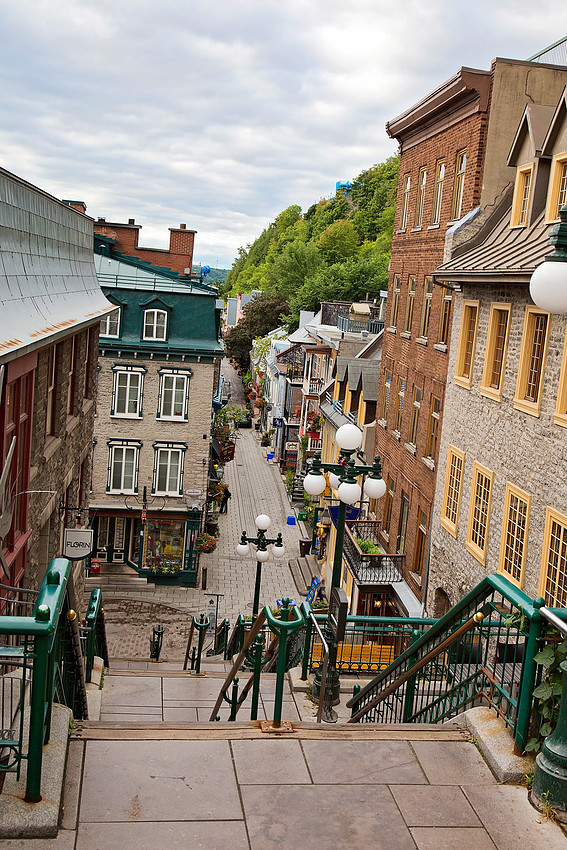
Monday morning, it was time to head back to Ontario. We got up very early, and Tim took the dogs for their morning walk while I took my camera and picked my way gingerly down to Lower Town. My muscles were stiff and sore from the effort of the preceding day. Still, it was a pleasant surprise to be able to manage the (many) stairs at all. It was really only on a downhill stretch of road that I felt bad pain, on the outside of my knee, and unfortunately that has yet to go away.
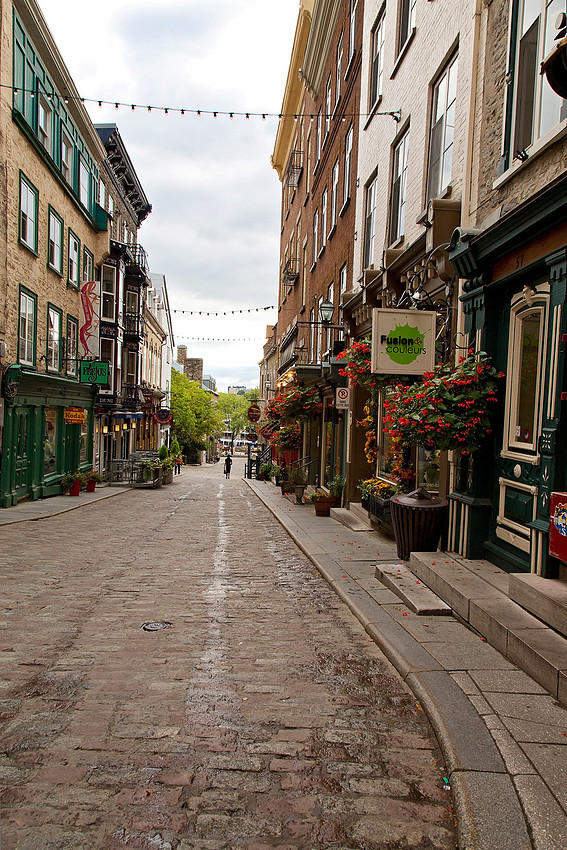
It was wonderful to wander around the usually chock-a-block quartier du Petit-Champlain and be just about the only human around in this normally tourist-infested area. Compare this set of pictures to the ones posted of the same area in the previous couple of blog entries. One abrupt influx of people hurried through at one point, and it didn't take me long to deduce that the ferry from Lévis had just docked. And then quiet reigned again.
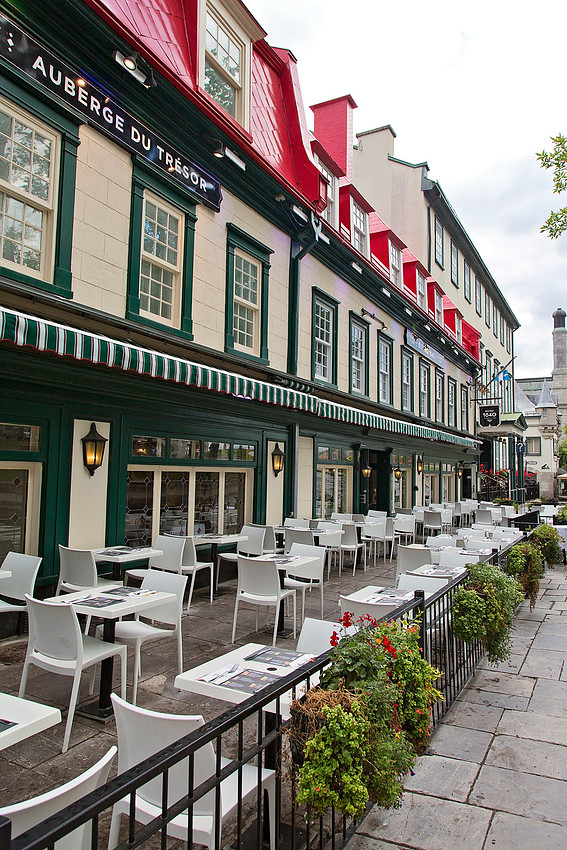

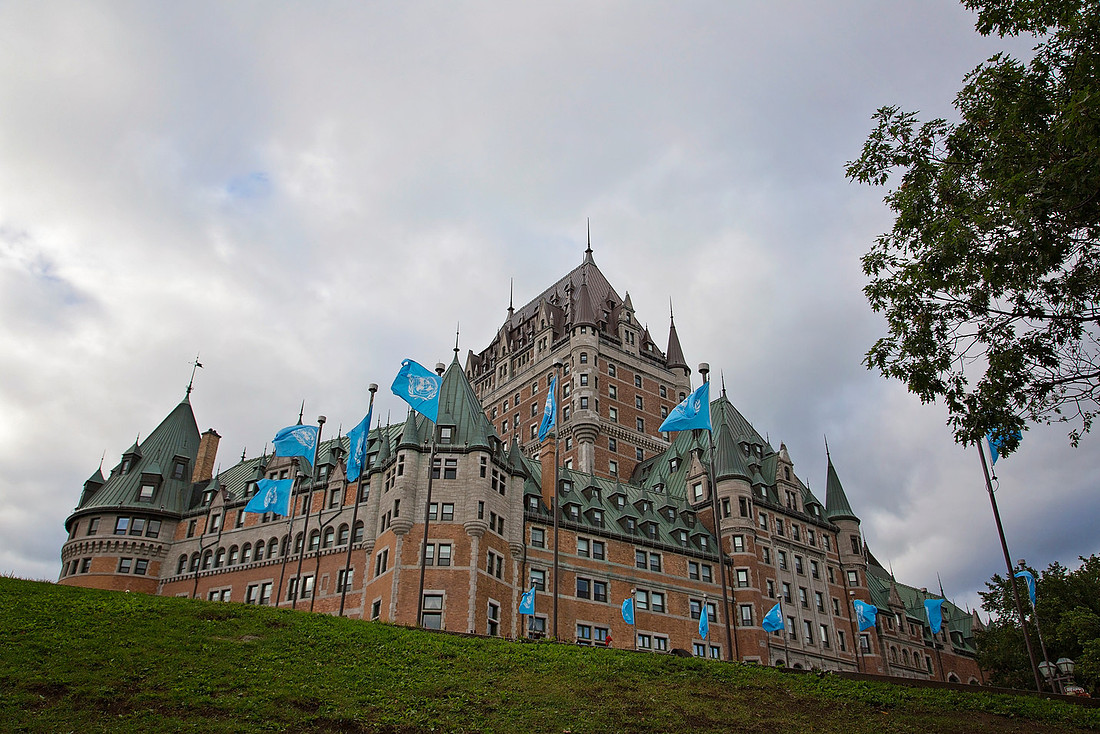
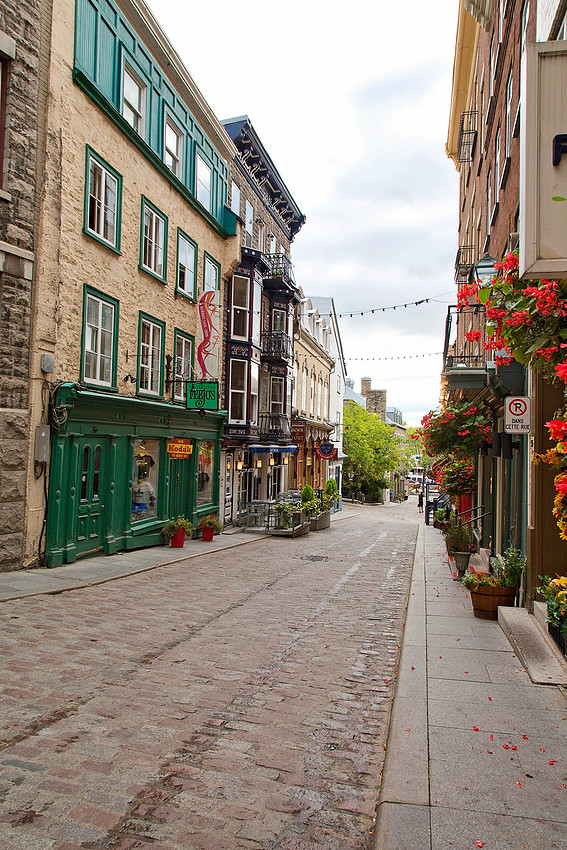
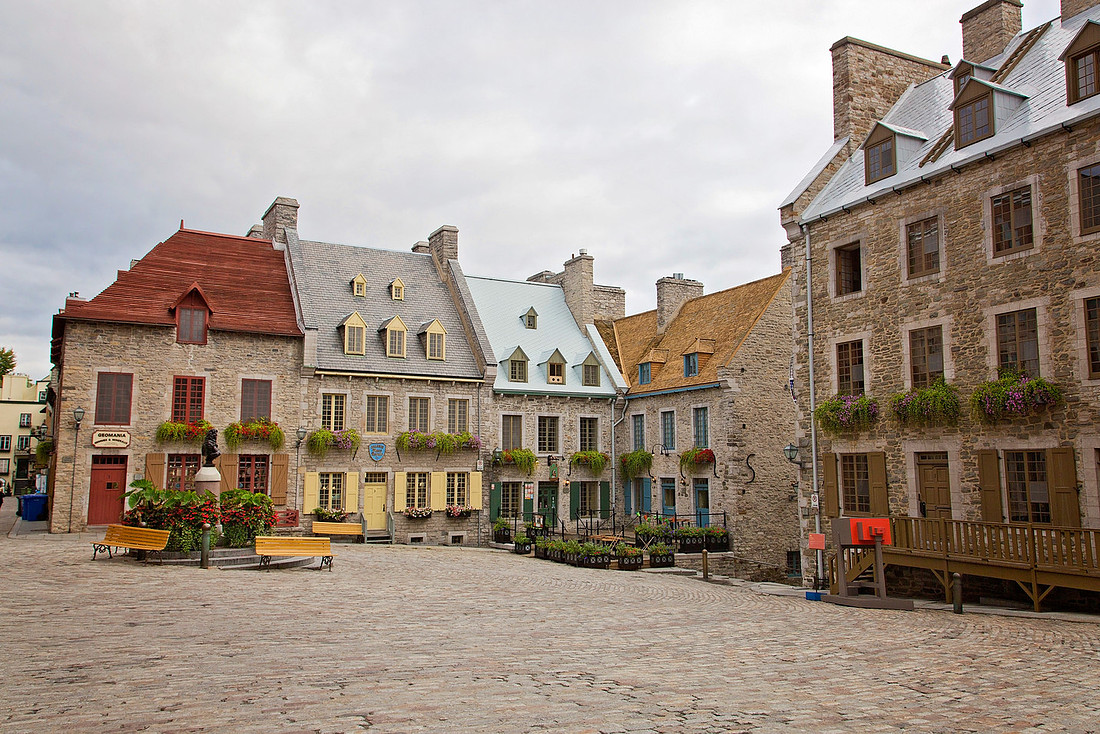
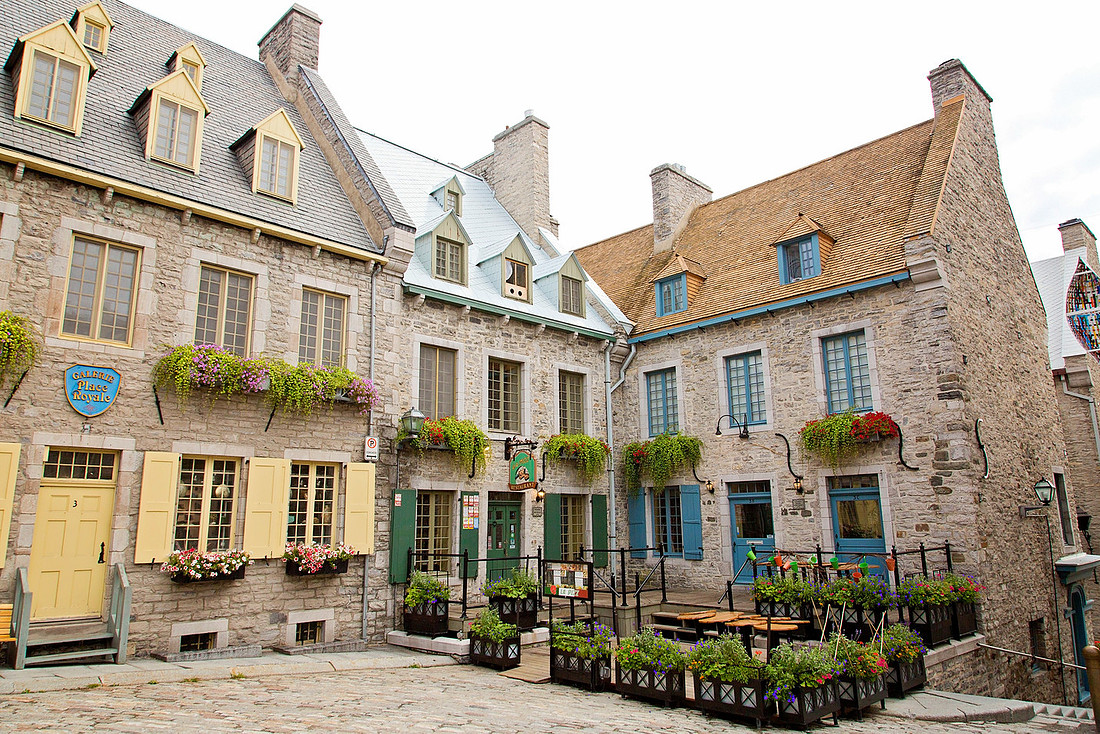
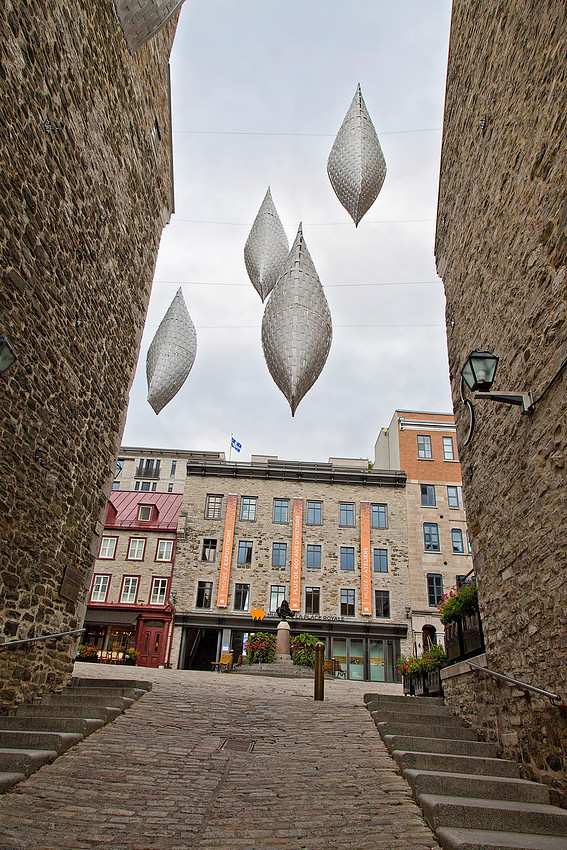
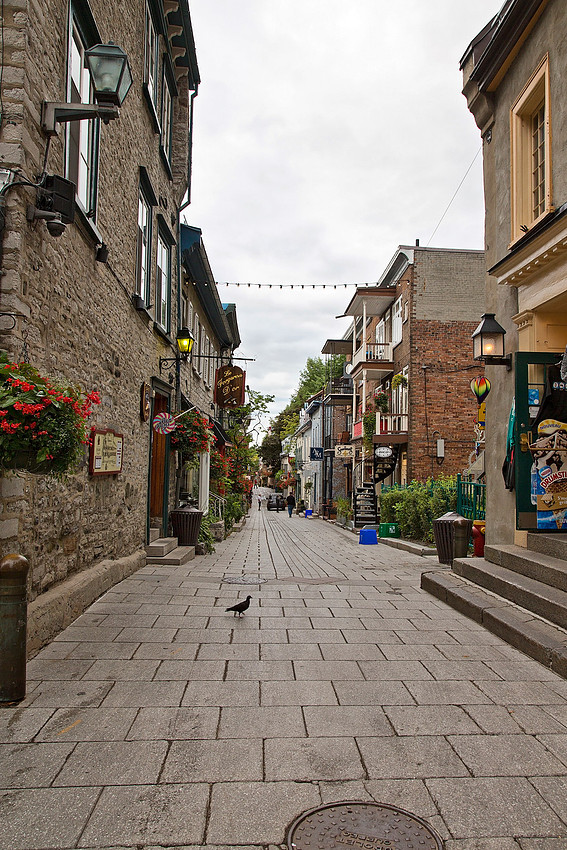
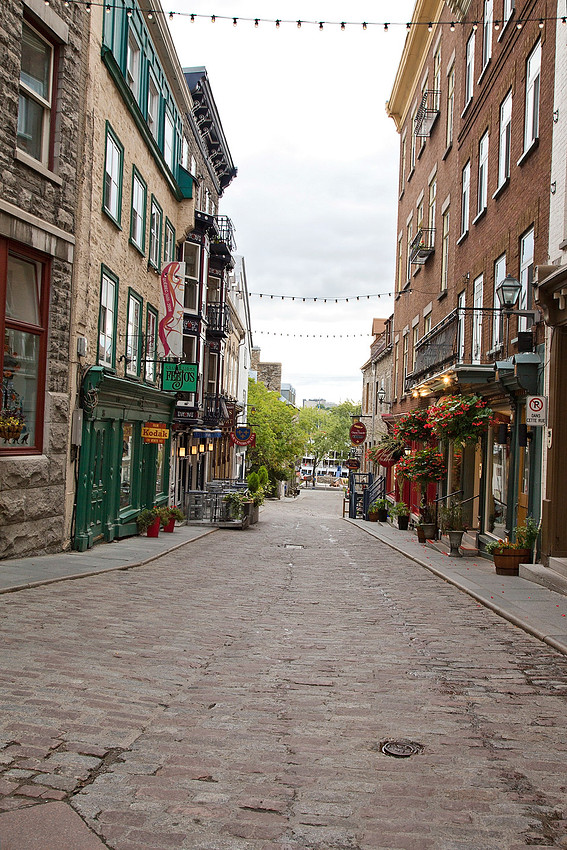
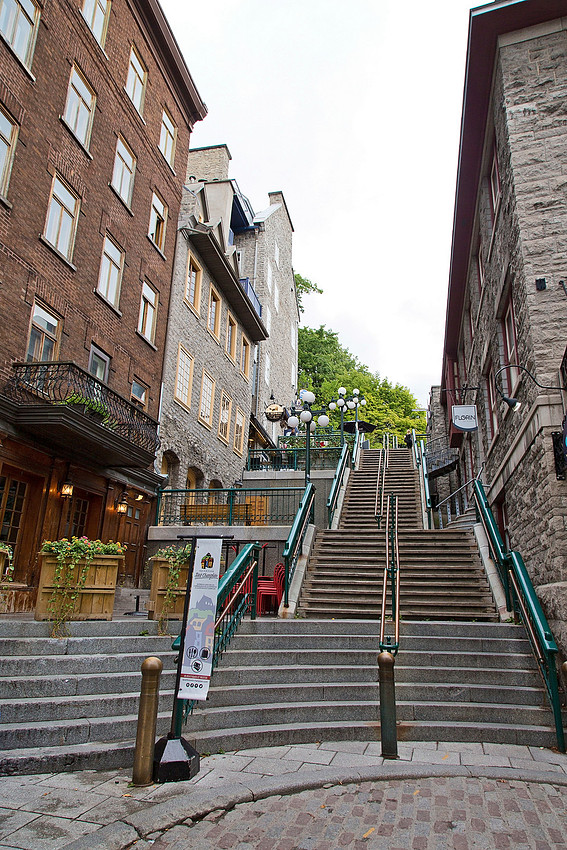
I climbed back up (a much less painful experience than down) and then walked the length of the Terrasse Dufferin, in front of the Château Frontenac hotel, to the fortifications and the edge of the famous Plaines d'Abraham.
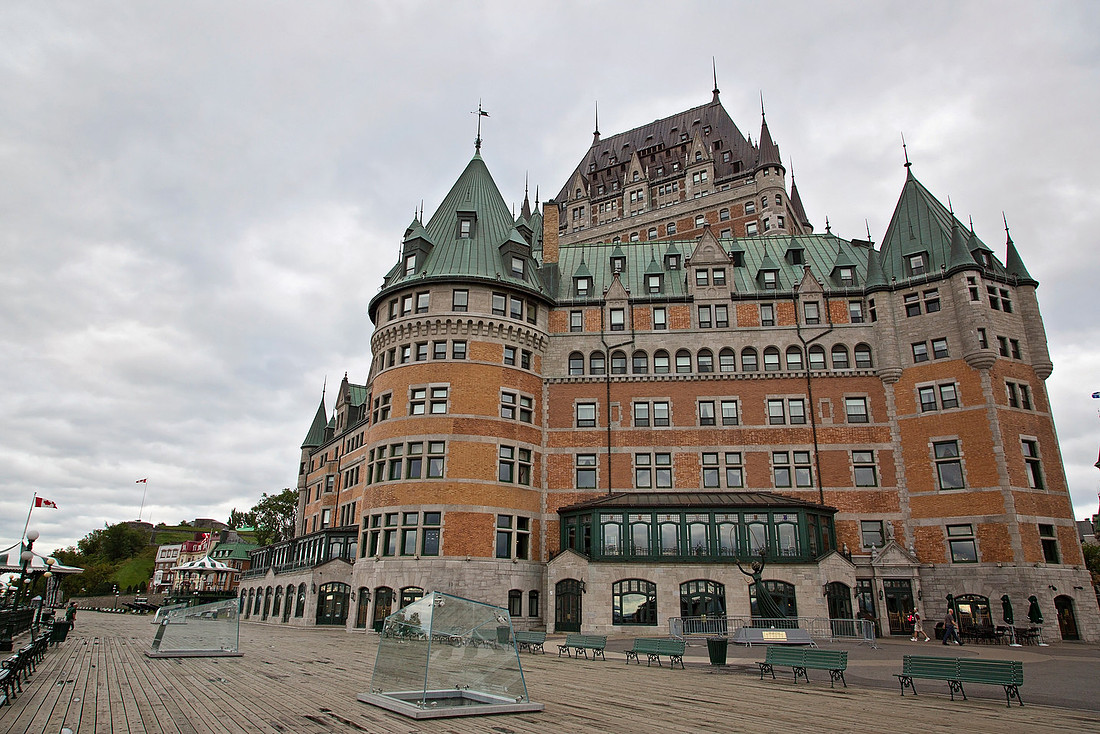
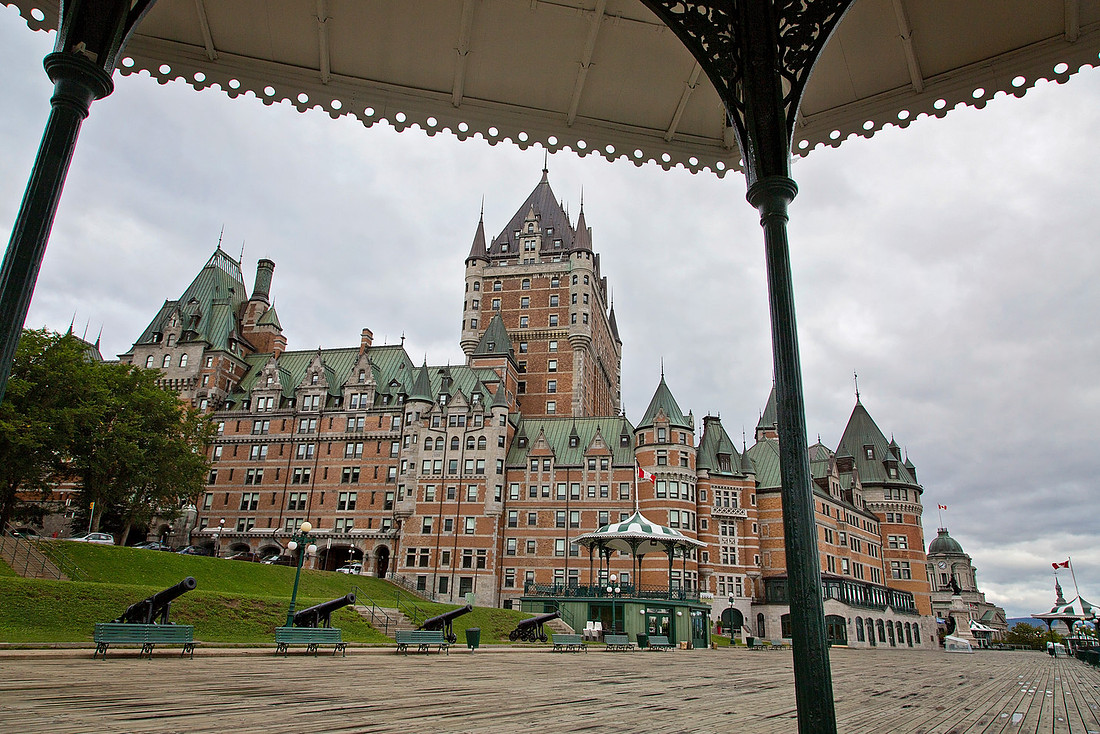
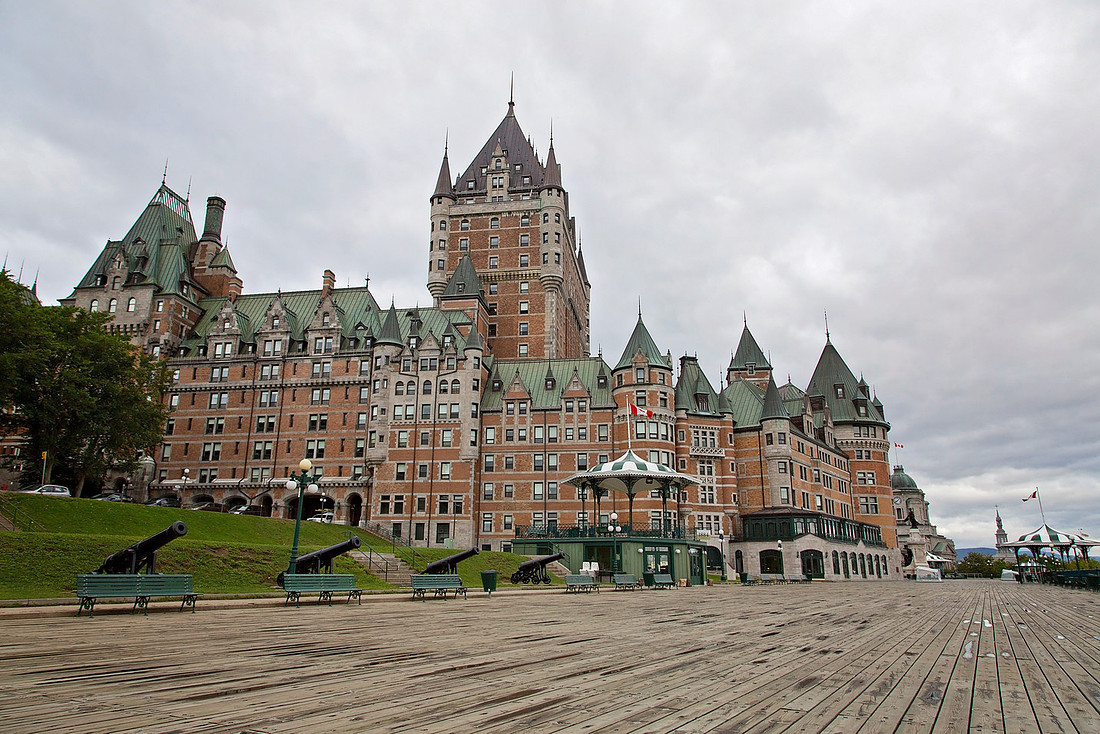
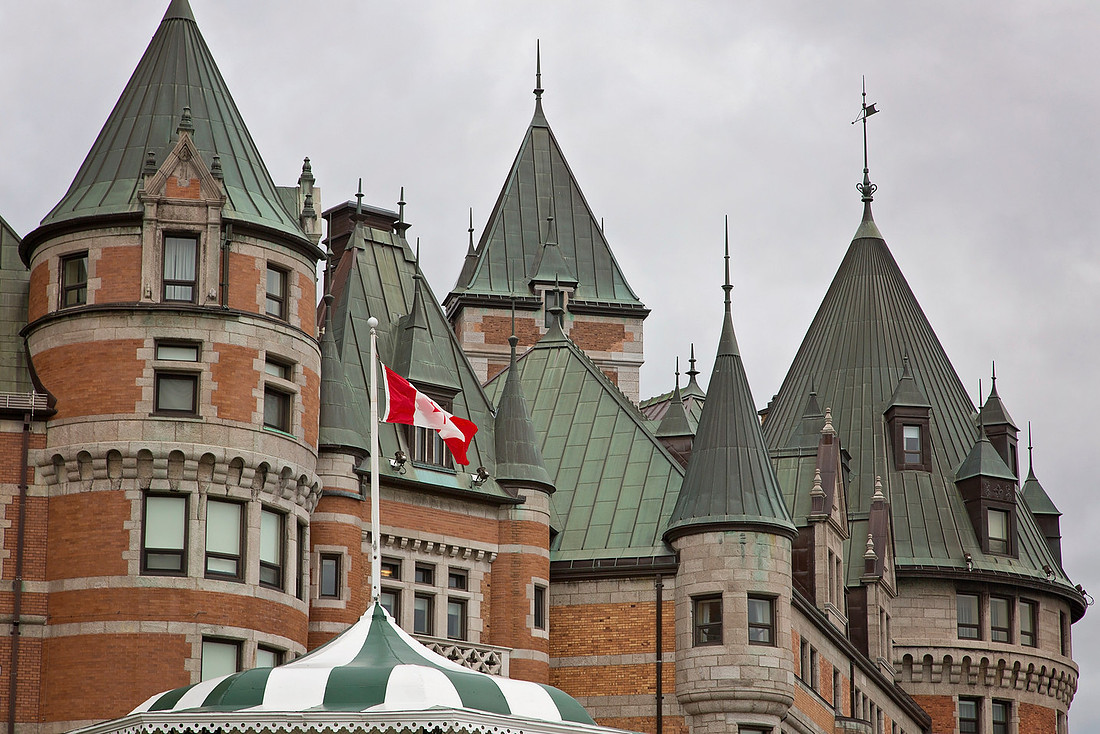
I've been a scholar and teacher of Québec history, literature and culture for much of my life, but I still marvel at the sequence of events that, in 1759, changed the course of history for Canada.
Briefly, Quebec City was a walled bastion of New France, as Canada was then known. England and France were engaged in the 7 Years War, and Quebec became one of the North American arenas of that conflict. The British, under General Wolfe, set up camp at the tip of the île d'Orléans. Several skirmishes were fought in and around the city, which sits fortress-like on a 65 metre promontory. A daunting site to capture, especially when you're looking up at it from river level.
After three months of siege, Wolfe lost patience. By sheer good fortune, he managed to sail ships, under cover of darkness, to a point three kilometres upstream from the city. An advance bataillon scaled the cliffs and captured the French lookout post. Then the rest of Wolfe's troops made their way up the cliffs and marched on Québec.
The French general, Montcalm, rather than waiting for support from the other half of his troops, who were ideally located just a bit further upstream, and who would have trapped the British in the middle, decided to leave the fortifications and engage immediately with the British on a plateau now known as the Plains of Abraham. The armies were more or less the same in number, but the British were well-trained, professional soldiers, while the French were an assortment of volunteers and conscripts, including quite a few Americans and Natives (each of those groups having a vested interest in getting the British out of North America), and the British swept the field and took the city. Both Montcalm and Wolfe died of injuries inflicted on the battlefield.
Less than four years later, the Treaty of Paris effectively ended the war and conceded nearly all of France's North American colonies to Great Britain. Canada went from being a French-speaking territory to an English one. In subsequent years, French colonists were required to take an oath of allegiance to the King and to the Church of England. Their only other alternative was exile. Many left, either into the Northeastern United States, or to Louisiana (the Cajuns) or other protectorates of France. Some attempted to ship back to France in unseaworthy craft provided by the British. Not many of them made it. France, for its part, seemed rather blasé about the loss. The philosopher Voltaire, for example, cavalierly referred to New France as ''a few acres of snow''.
In the end, Quebec did manage to maintain its French language and its distinct culture, but you have to wonder what things might have been like today, had the stars not aligned the way they did in September, 1759.
And today, the Québec licence plate, ''je me souviens'' (I remember) bears witness to this history.
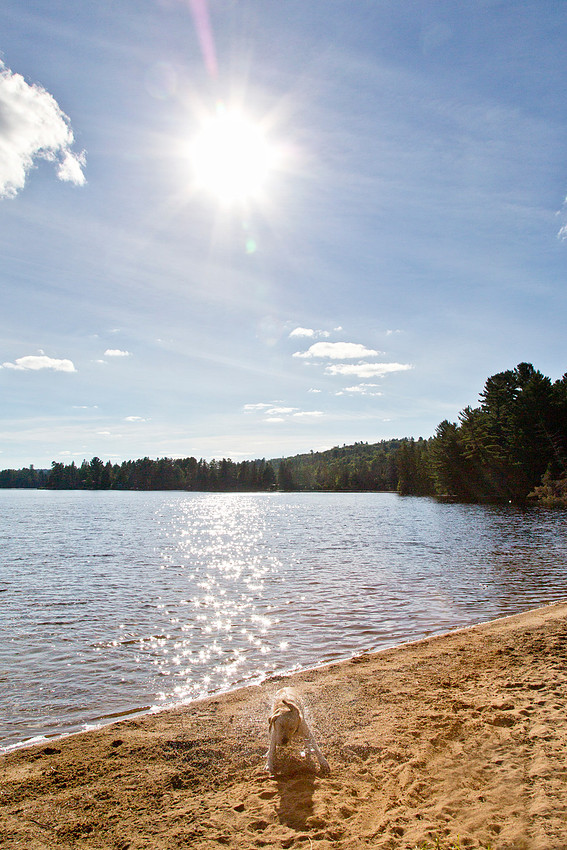
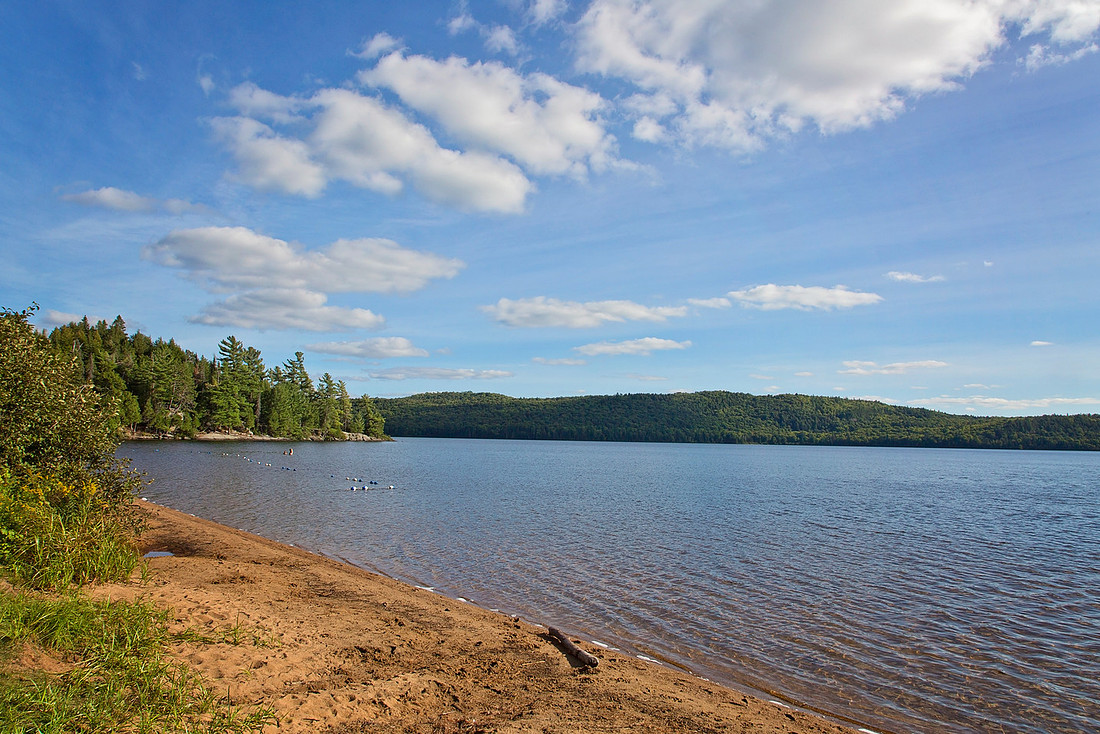
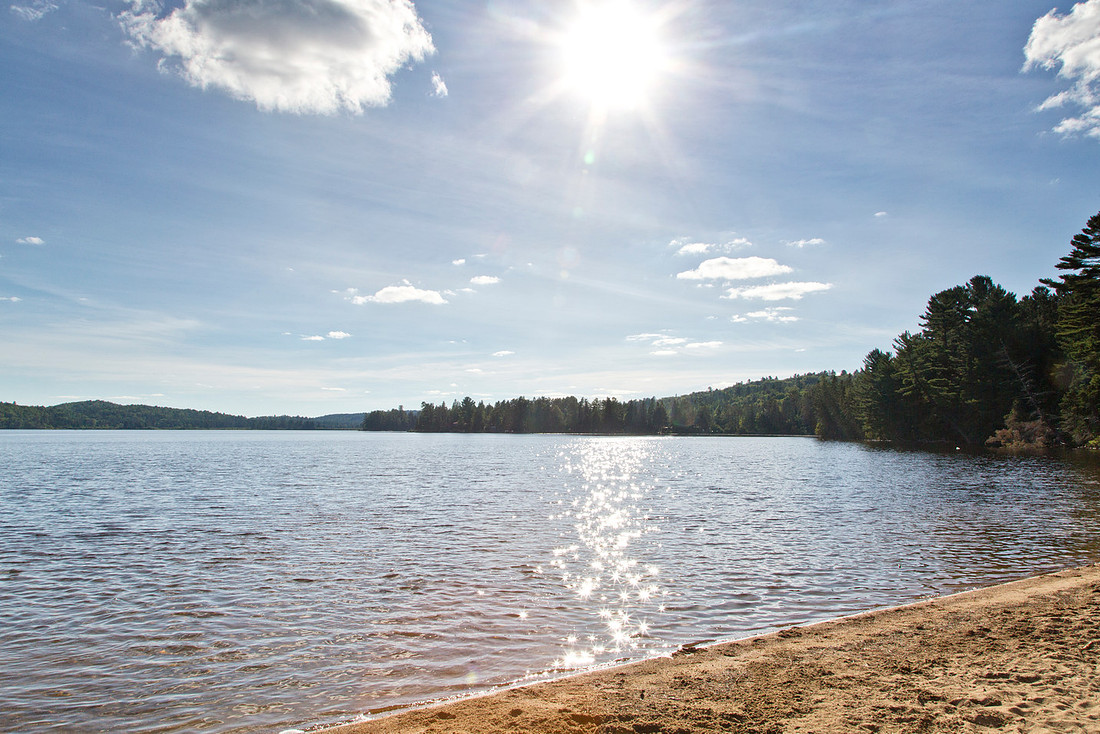
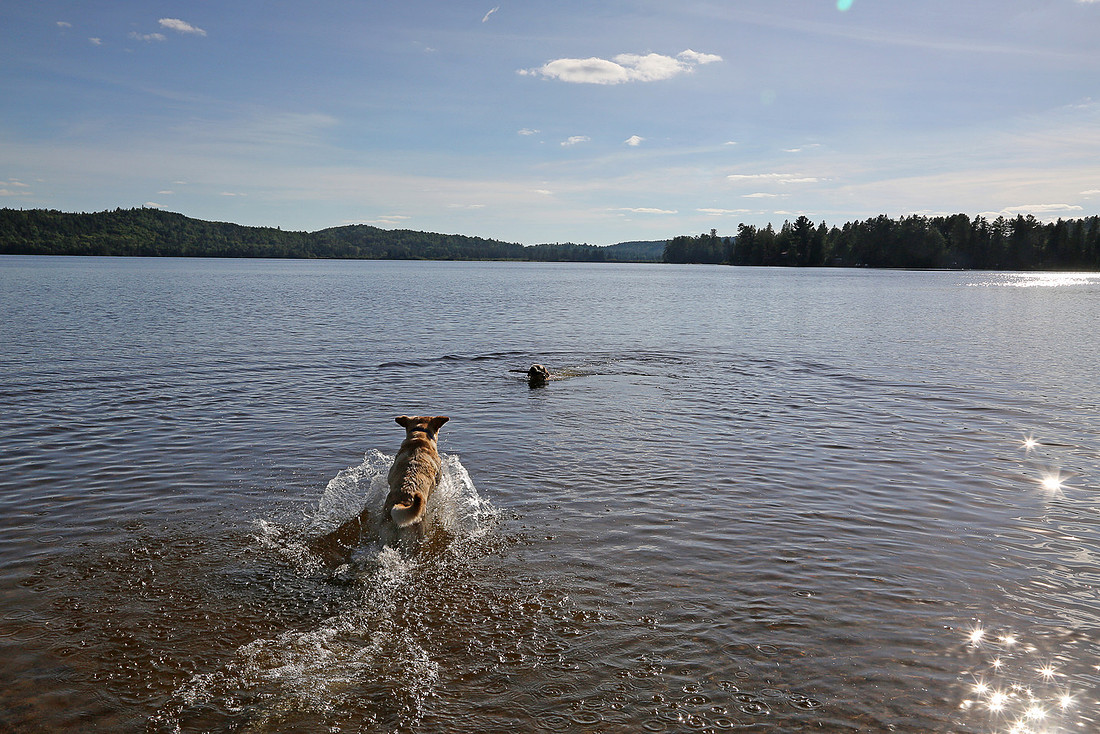
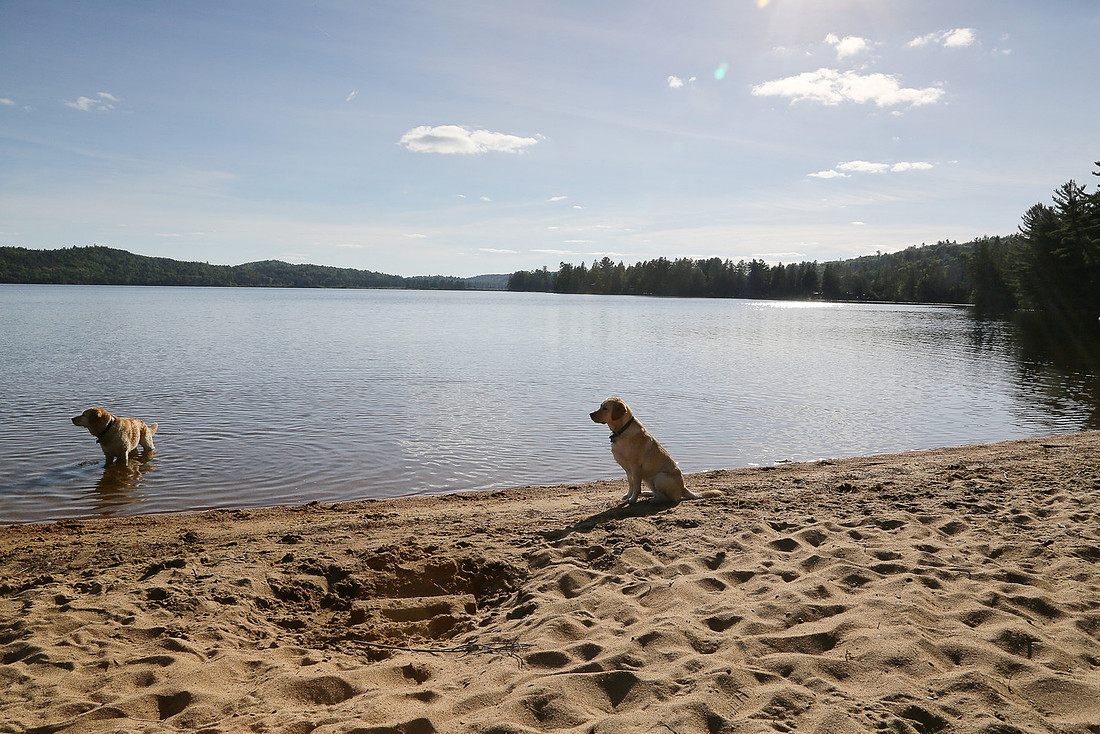
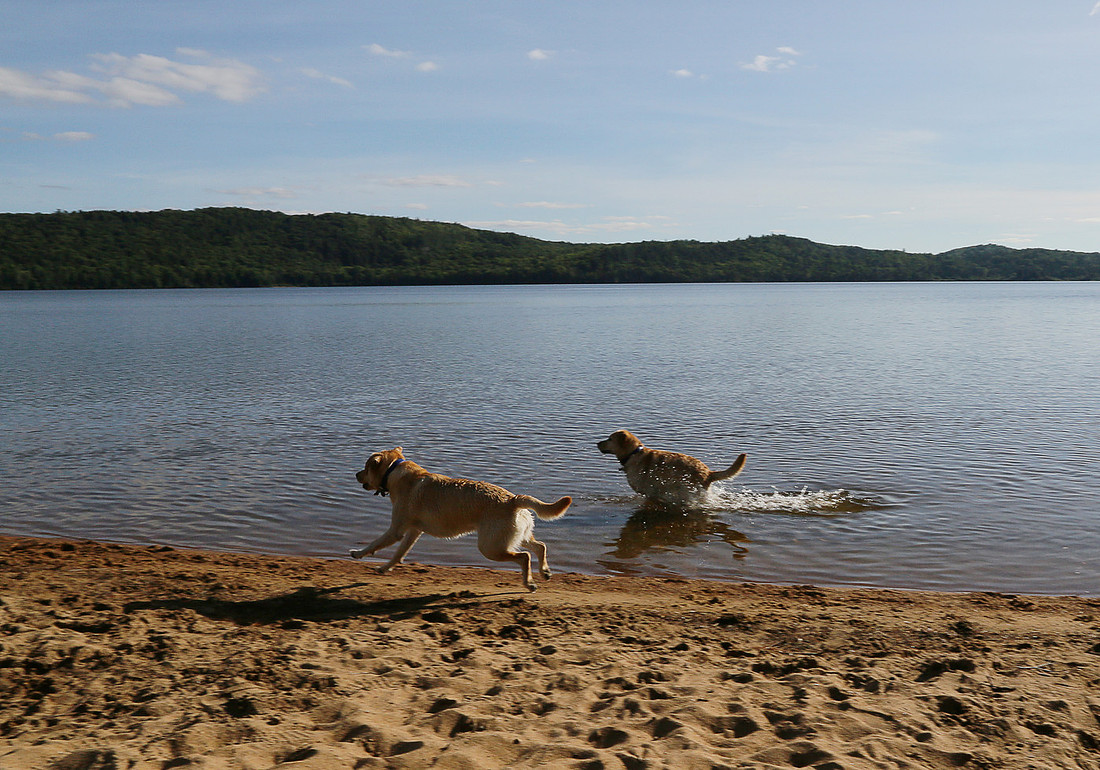
And back to our own journey. It was long, and unremarkable for the most part. We found a new route that allows us to bypass Ottawa and its traffic, while taking us through the lovely Parc de la Gatineau. I made Tim stop at a favourite place of mine, Lake of Two Rivers, in Algonquin Park, where the dogs had a swim to cap off their little holiday.
Comments
Hope your knee has improved since.