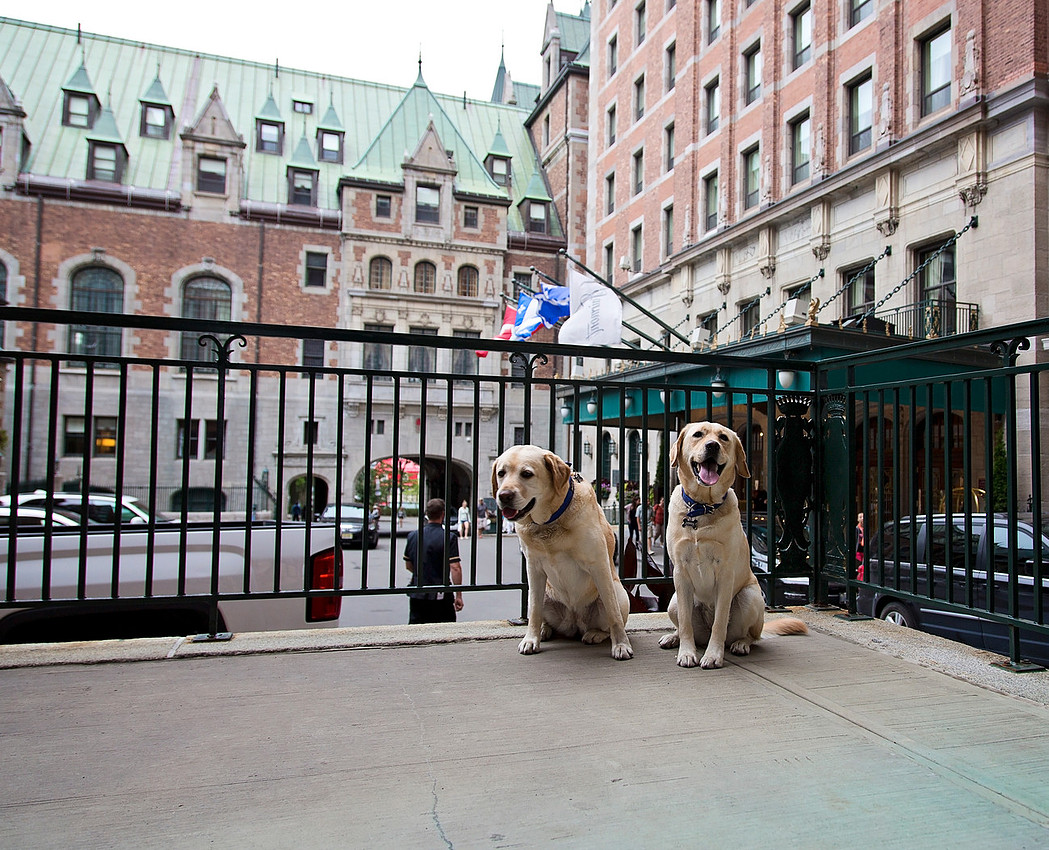
Beside
Don’t walk in front of me… I may not follow
Don’t walk behind me… I may not lead
Walk beside me… just be my friend.
-Albert Camus
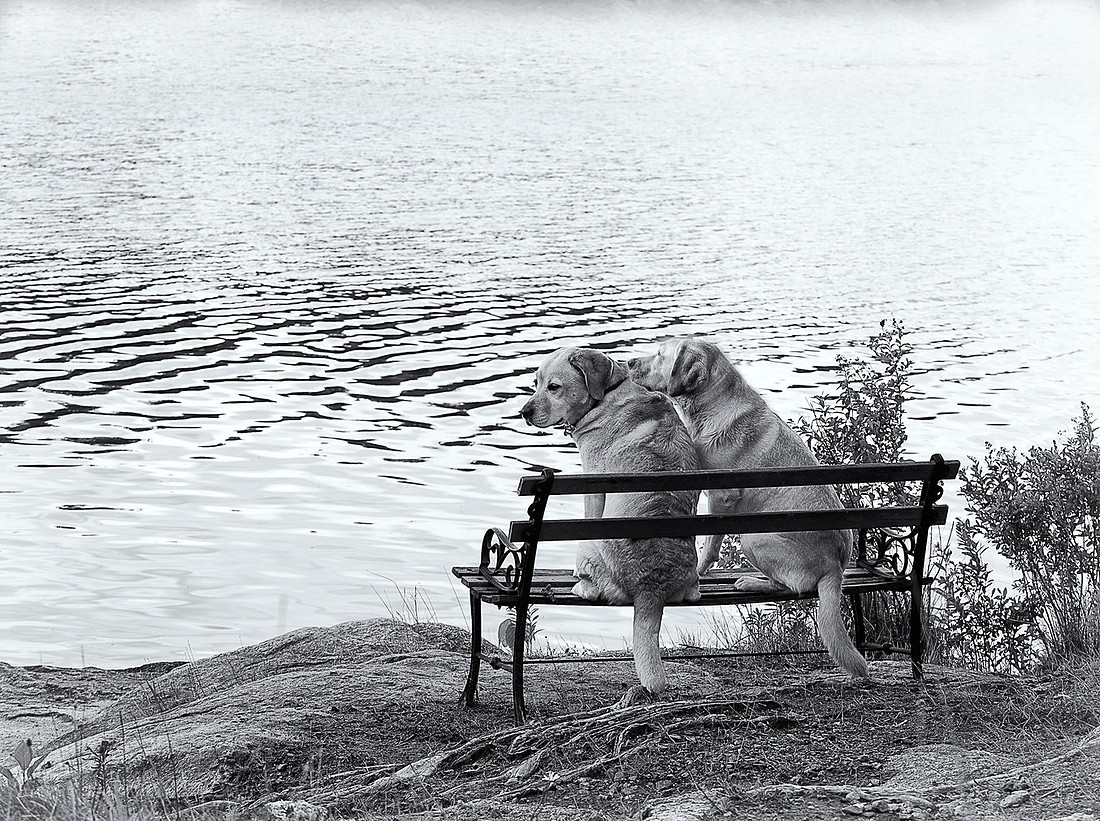

Water and Stone
“It is the nature of stone to be satisfied. It is the nature of water to want to be somewhere else.”
― Mary Oliver
(perhaps my favourite quote ever, for I am both)
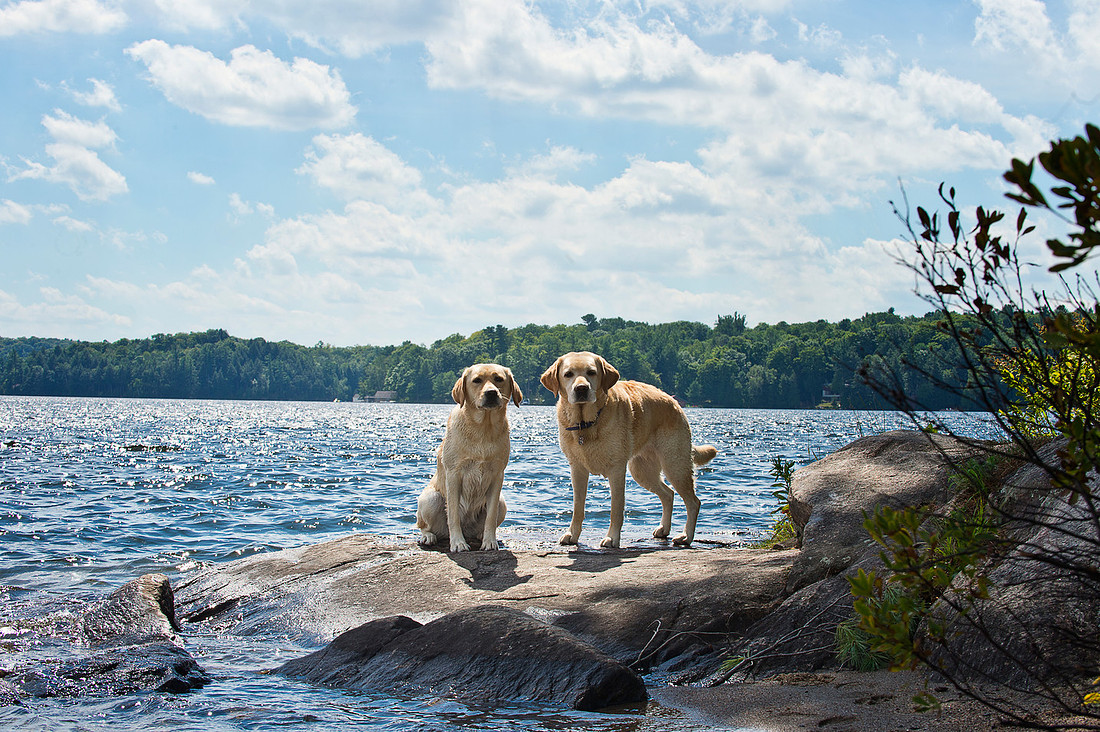
Soleil and Arwen's excellent adventure - end of this chapter.
Thank you for coming along for the ride.
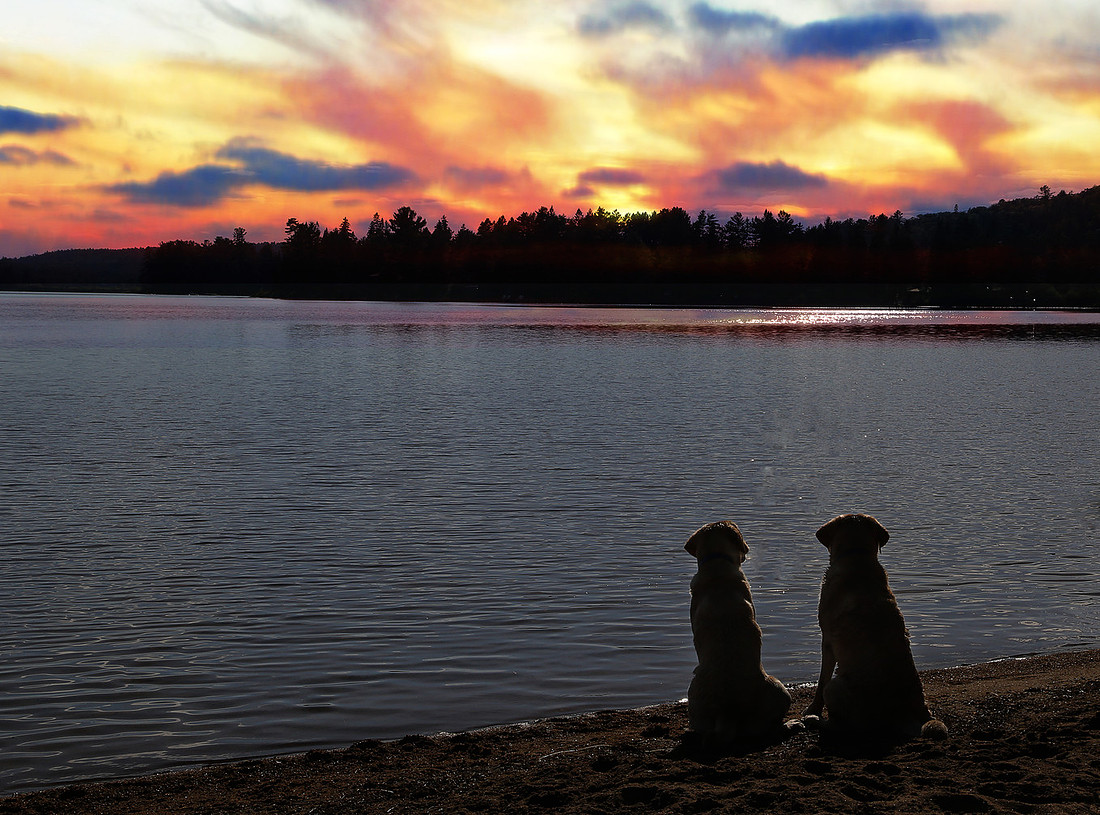
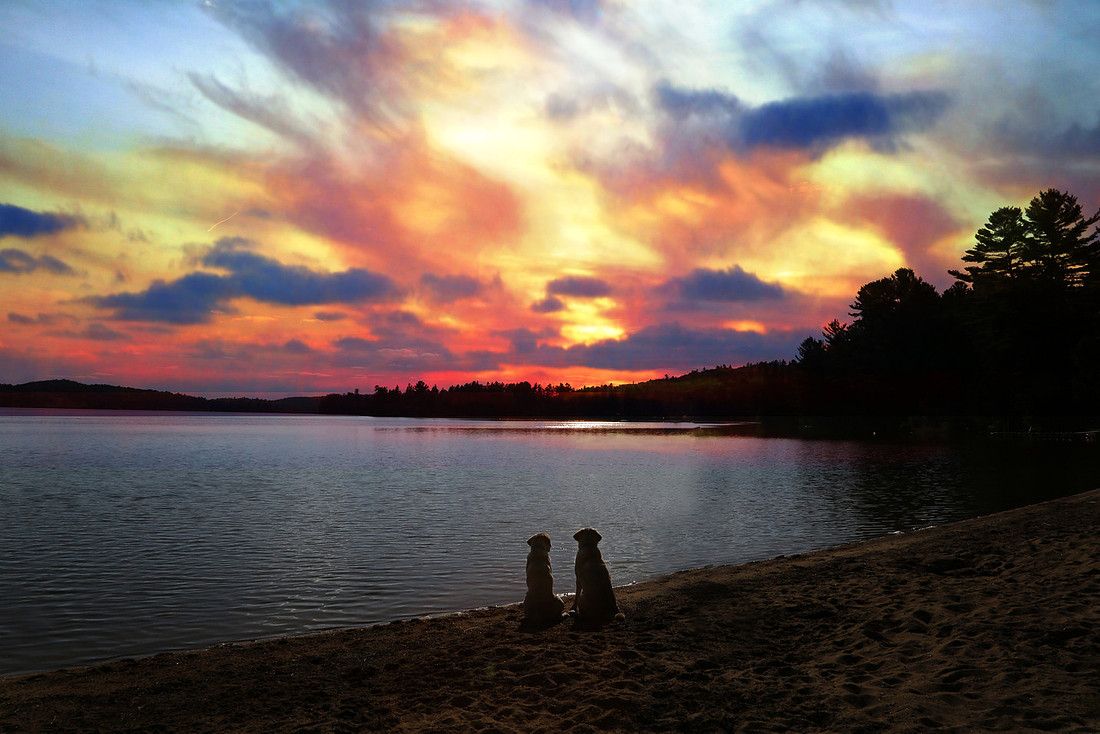
Soleil and Arwen's excellent adventure - day 4
The journey home
Monday morning, it was time to head back to Ontario. We got up very early, and Tim took the dogs for their morning walk while I took my camera and picked my way gingerly down to Lower Town. My muscles were stiff and sore from the effort of the preceding day. Still, it was a pleasant surprise to be able to manage the (many) stairs at all. It was really only on a downhill stretch of road that I felt bad pain, on the outside of my knee, and unfortunately that has yet to go away.
It was wonderful to wander around the usually chock-a-block quartier du Petit-Champlain and be just about the only human around in this normally tourist-infested area. Compare this set of pictures to the ones posted of the same area in the previous couple of blog entries. One abrupt influx of people hurried through at one point, and it didn't take me long to deduce that the ferry from Lévis had just docked. And then quiet reigned again.
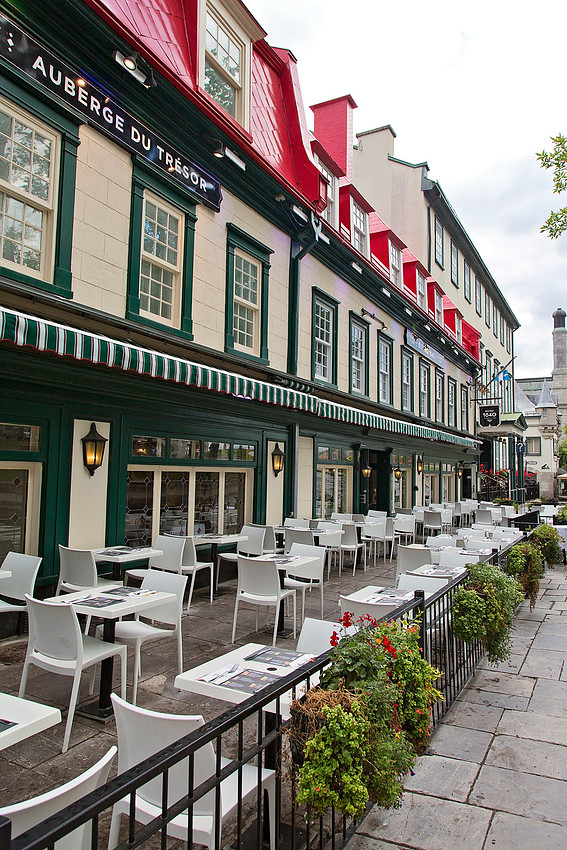
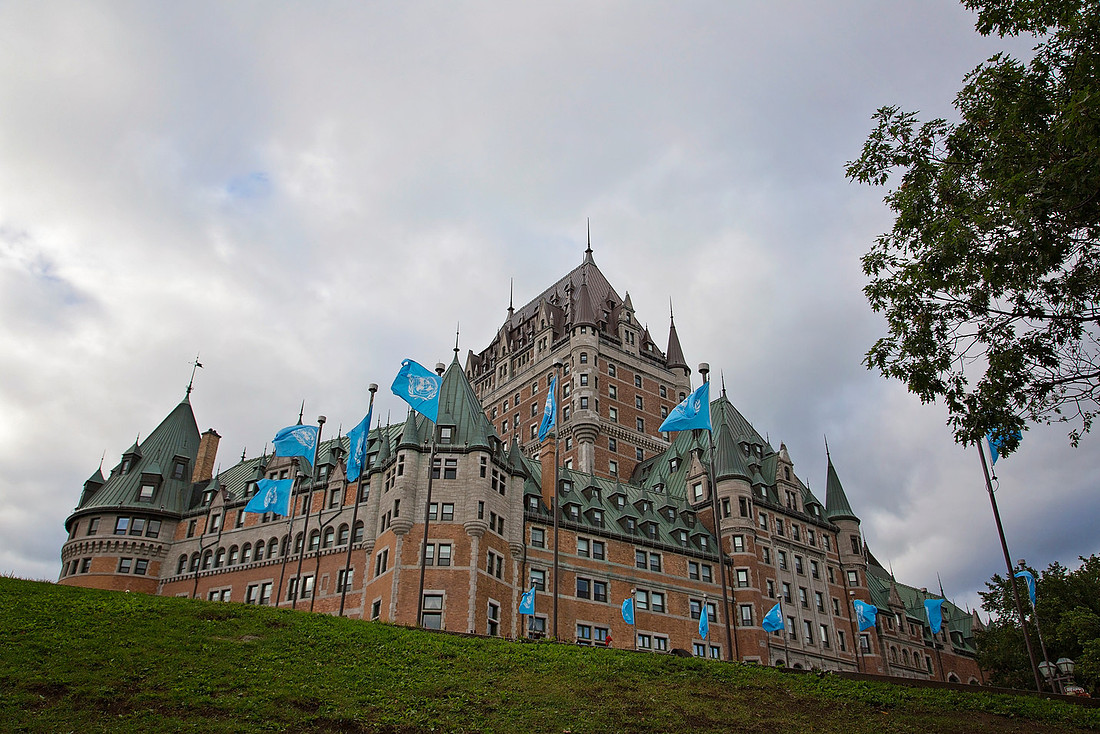
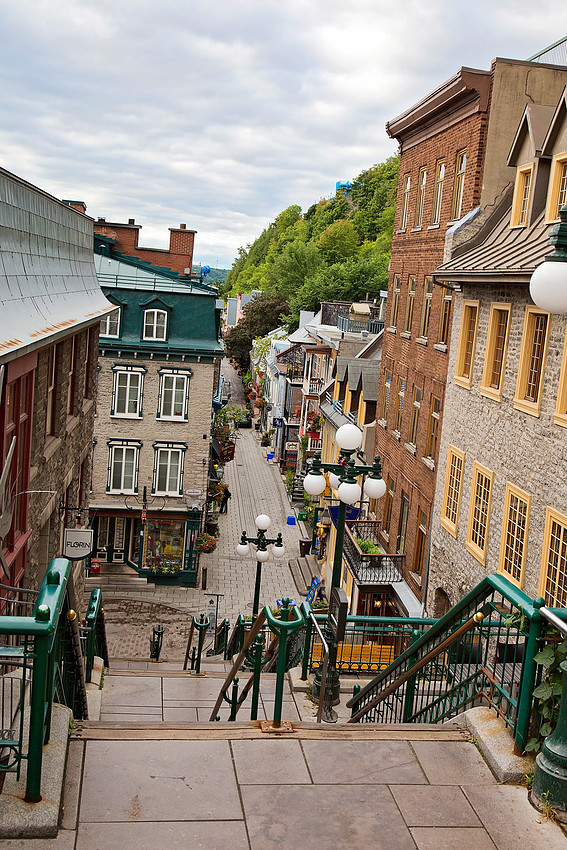
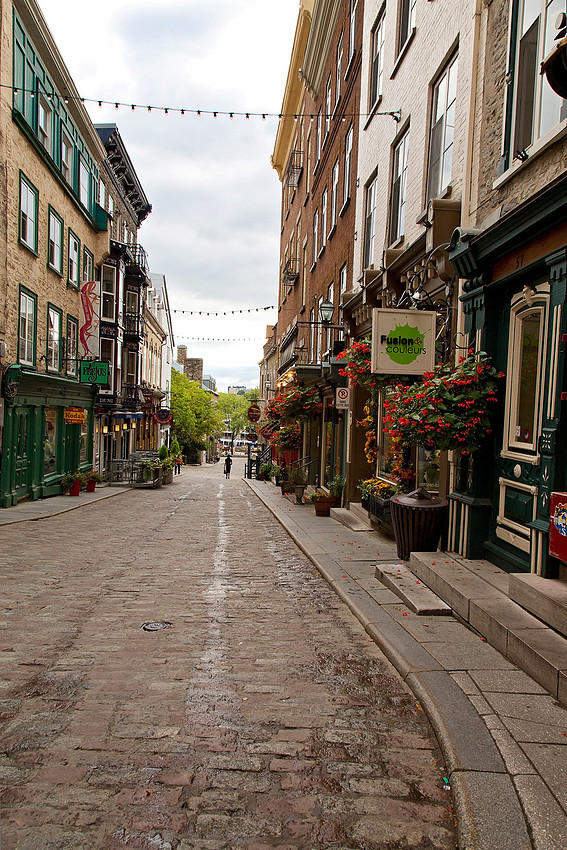
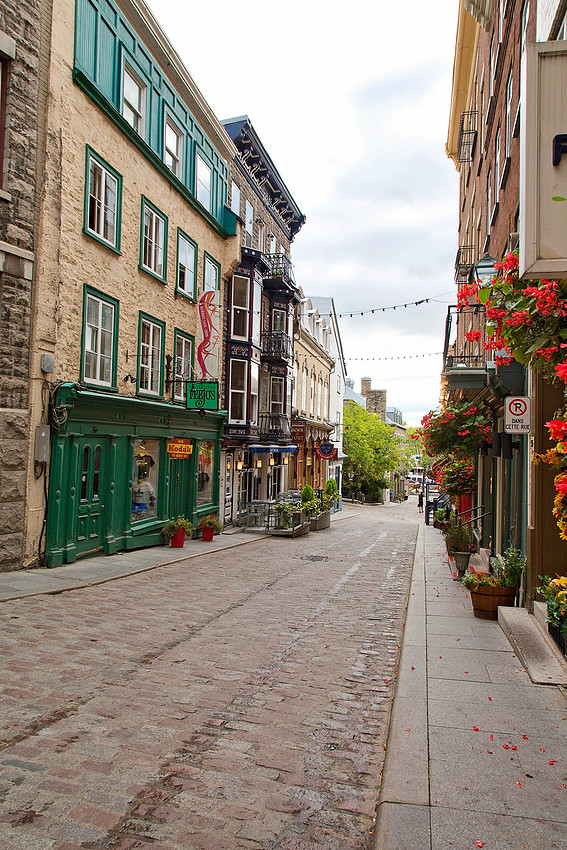
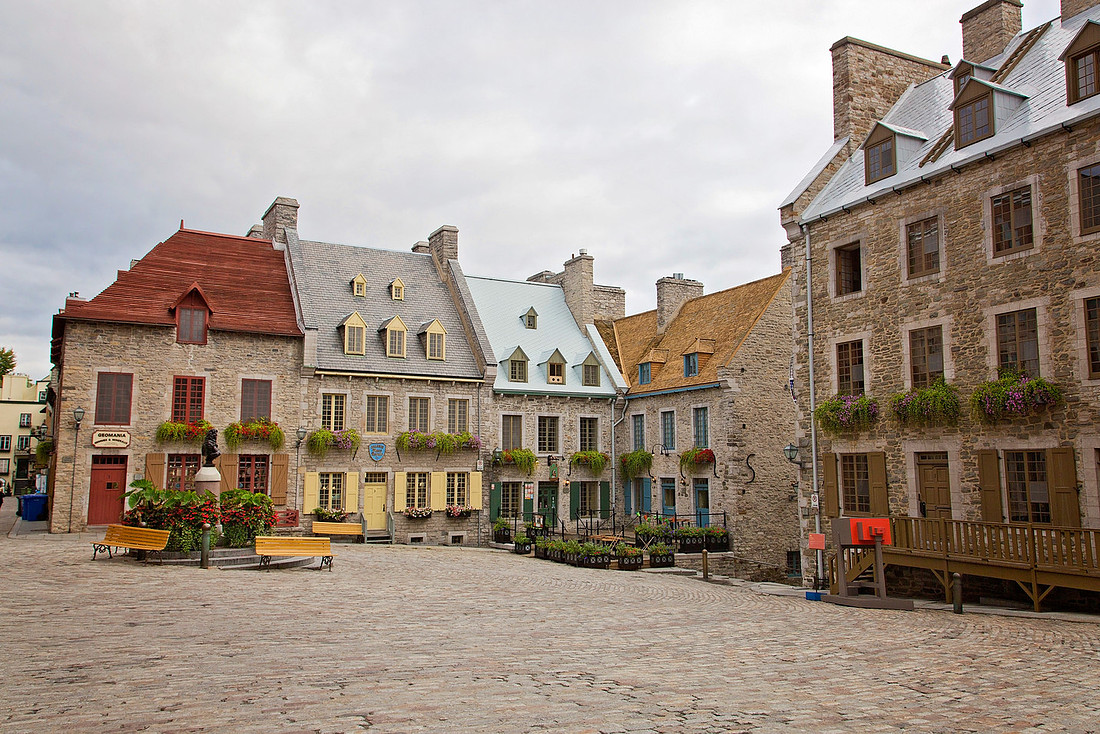
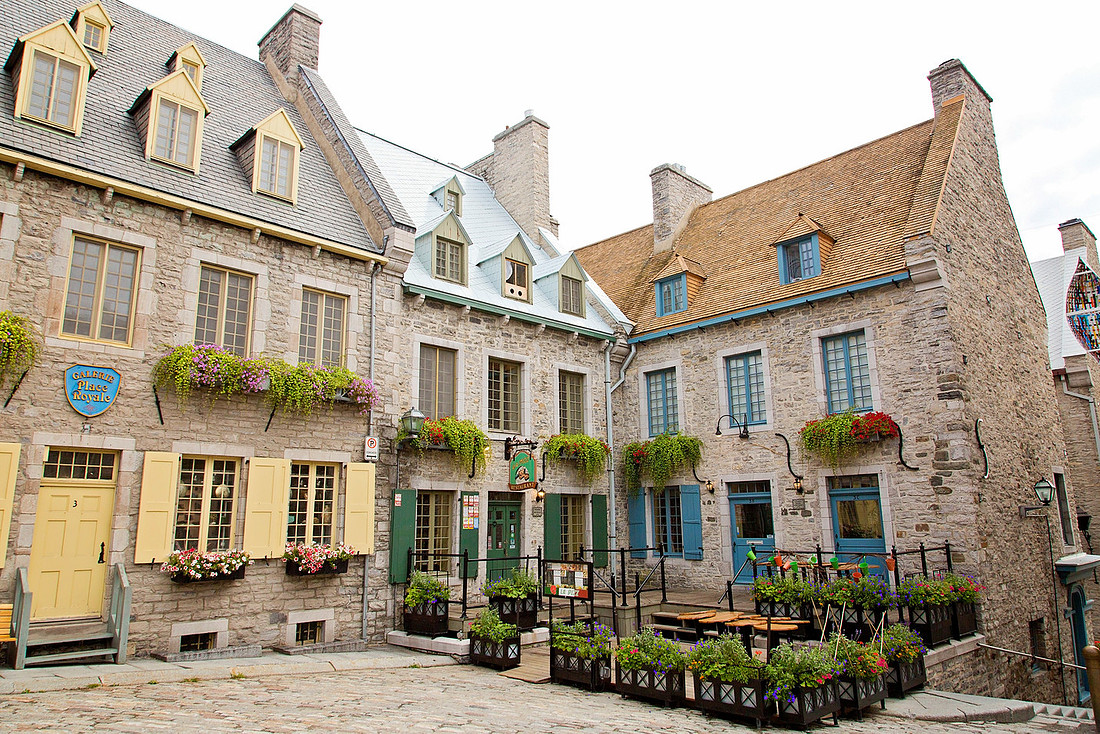
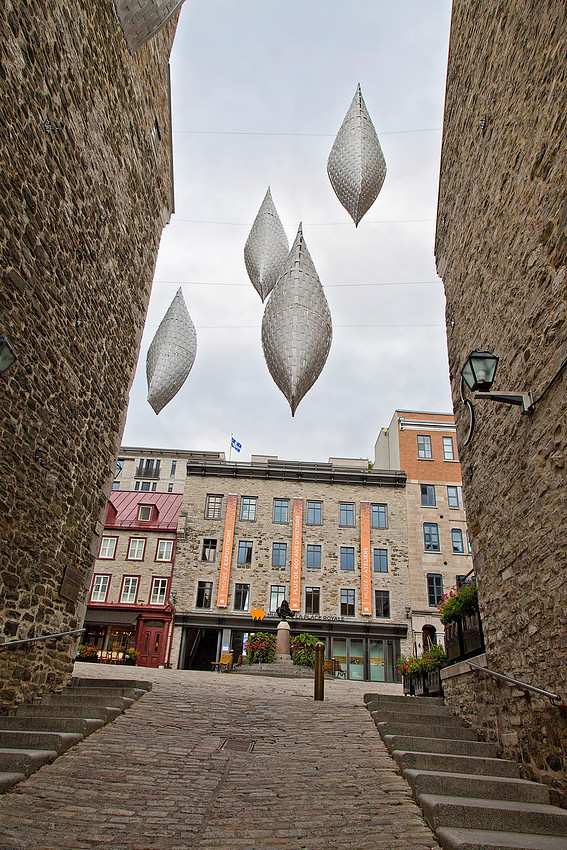
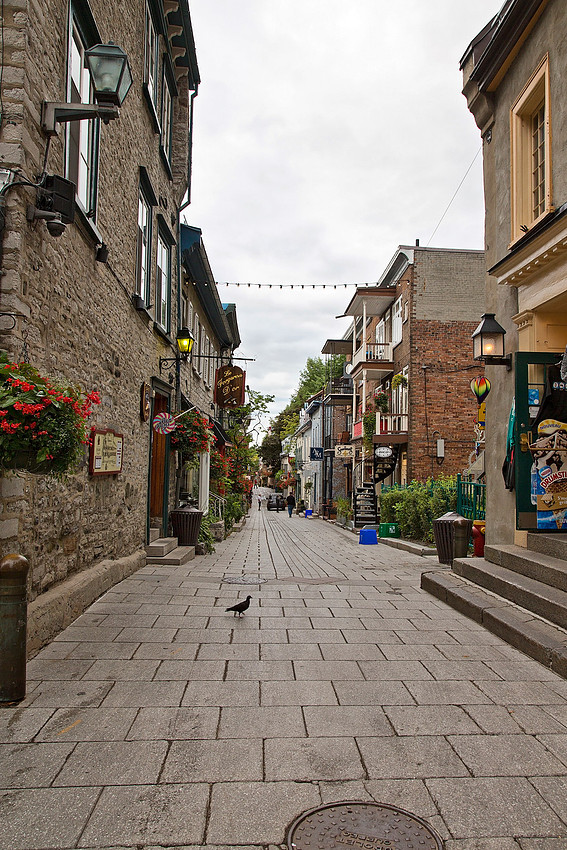
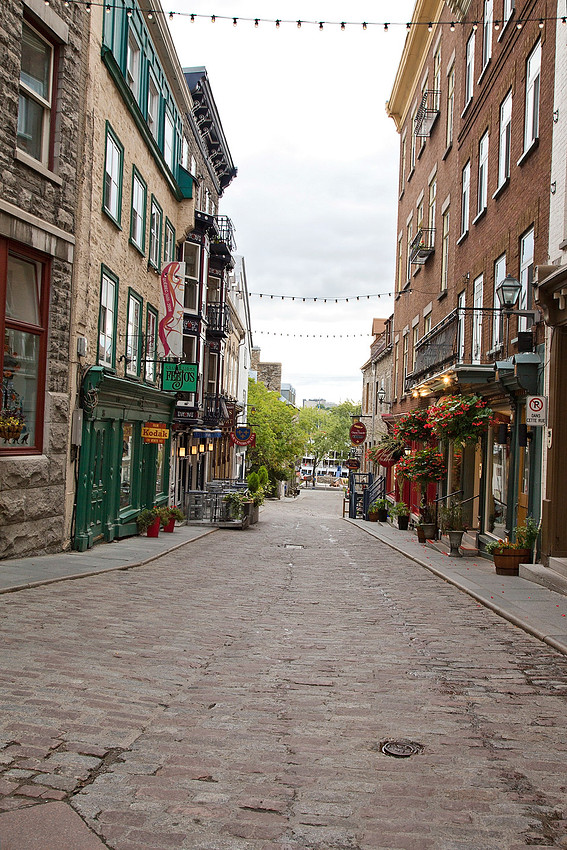
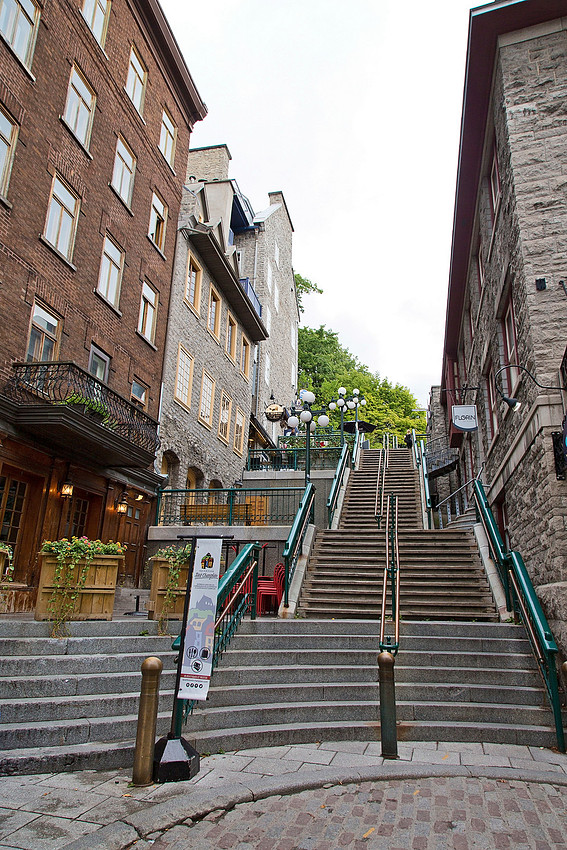
I climbed back up (a much less painful experience than down) and then walked the length of the Terrasse Dufferin, in front of the Château Frontenac hotel, to the fortifications and the edge of the famous Plaines d'Abraham.
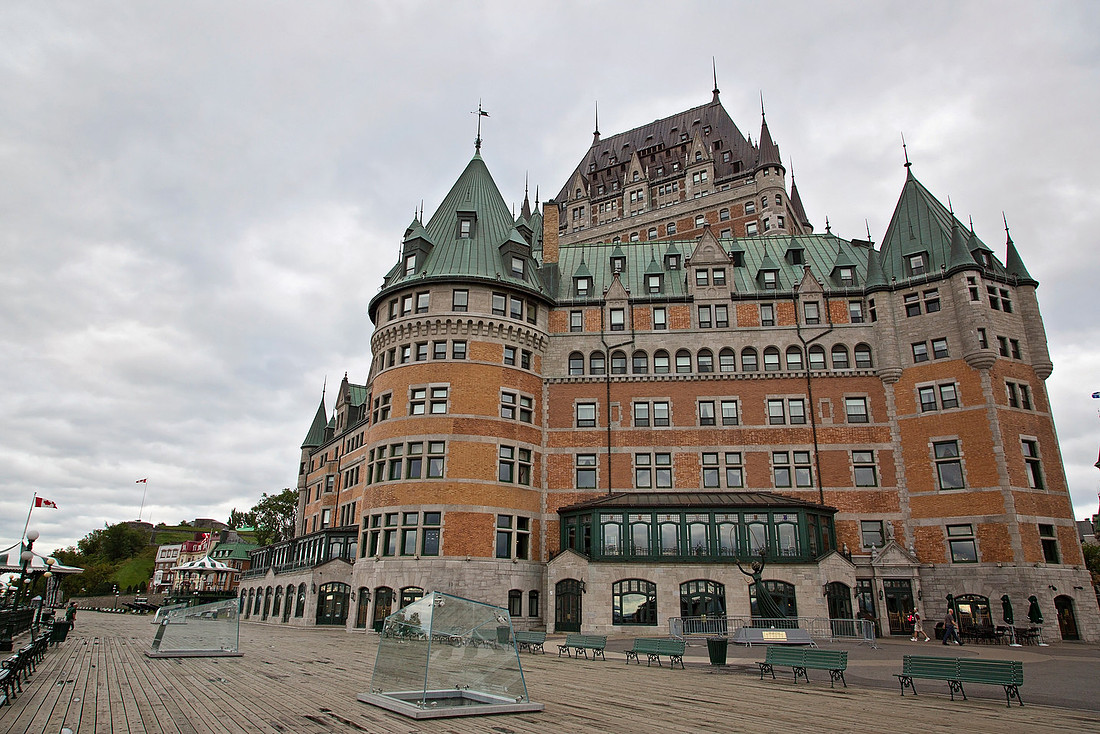
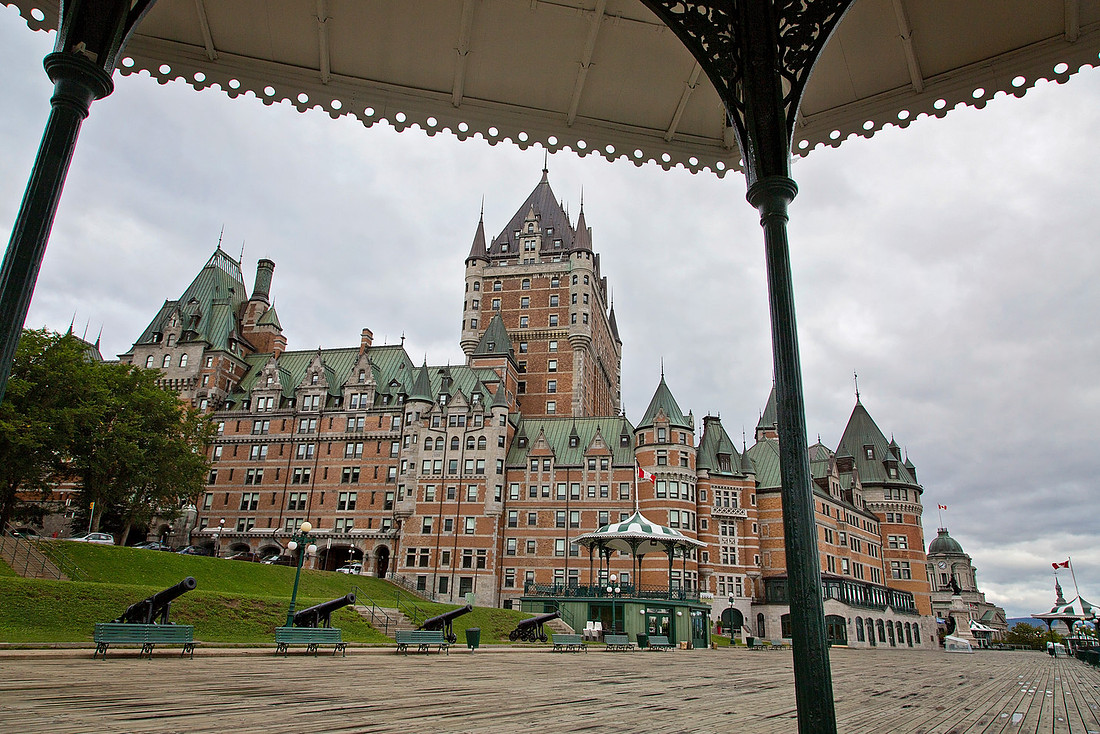
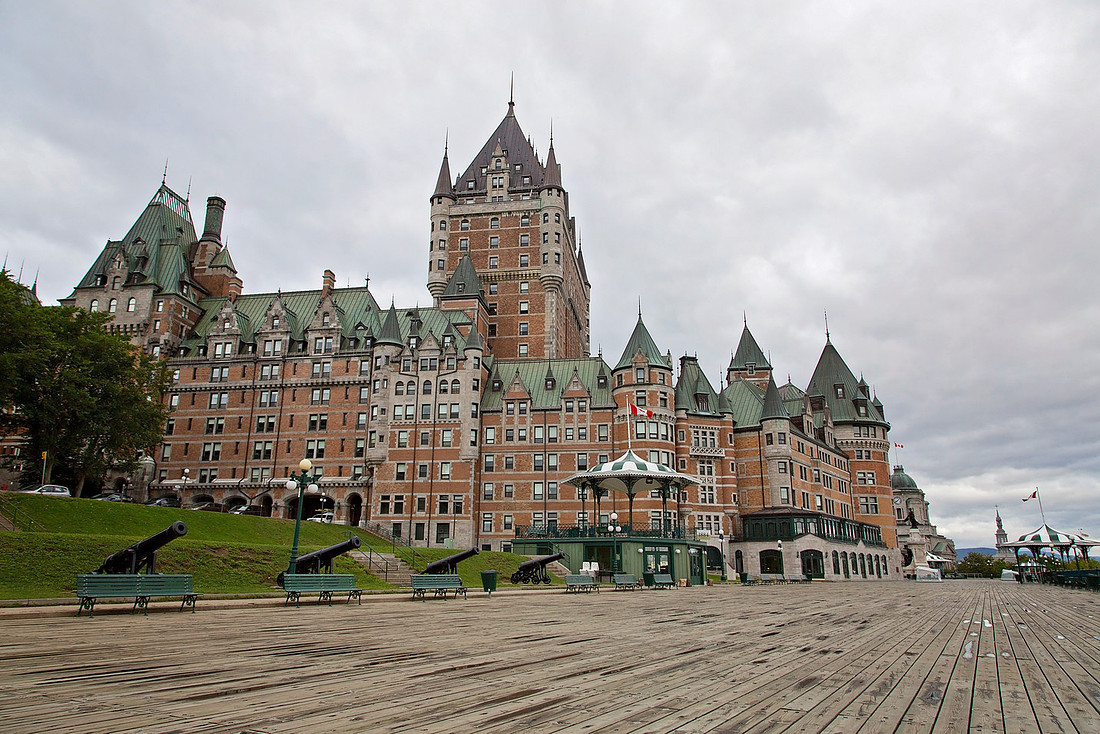
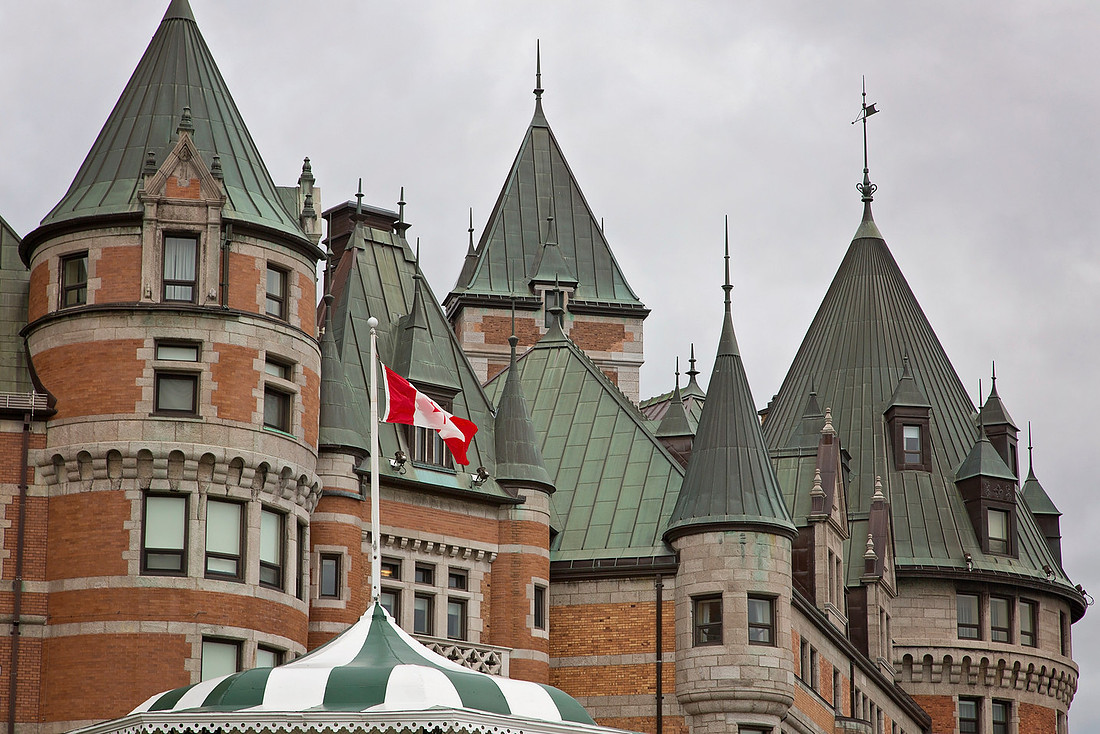
I've been a scholar and teacher of Québec history, literature and culture for much of my life, but I still marvel at the sequence of events that, in 1759, changed the course of history for Canada.
Briefly, Quebec City was a walled bastion of New France, as Canada was then known. England and France were engaged in the 7 Years War, and Quebec became one of the North American arenas of that conflict. The British, under General Wolfe, set up camp at the tip of the île d'Orléans. Several skirmishes were fought in and around the city, which sits fortress-like on a 65 metre promontory. A daunting site to capture, especially when you're looking up at it from river level.
After three months of siege, Wolfe lost patience. By sheer good fortune, he managed to sail ships, under cover of darkness, to a point three kilometres upstream from the city. An advance bataillon scaled the cliffs and captured the French lookout post. Then the rest of Wolfe's troops made their way up the cliffs and marched on Québec.
The French general, Montcalm, rather than waiting for support from the other half of his troops, who were ideally located just a bit further upstream, and who would have trapped the British in the middle, decided to leave the fortifications and engage immediately with the British on a plateau now known as the Plains of Abraham. The armies were more or less the same in number, but the British were well-trained, professional soldiers, while the French were an assortment of volunteers and conscripts, including quite a few Americans and Natives (each of those groups having a vested interest in getting the British out of North America), and the British swept the field and took the city. Both Montcalm and Wolfe died of injuries inflicted on the battlefield.
Less than four years later, the Treaty of Paris effectively ended the war and conceded nearly all of France's North American colonies to Great Britain. Canada went from being a French-speaking territory to an English one. In subsequent years, French colonists were required to take an oath of allegiance to the King and to the Church of England. Their only other alternative was exile. Many left, either into the Northeastern United States, or to Louisiana (the Cajuns) or other protectorates of France. Some attempted to ship back to France in unseaworthy craft provided by the British. Not many of them made it. France, for its part, seemed rather blasé about the loss. The philosopher Voltaire, for example, cavalierly referred to New France as ''a few acres of snow''.
In the end, Quebec did manage to maintain its French language and its distinct culture, but you have to wonder what things might have been like today, had the stars not aligned the way they did in September, 1759.
And today, the Québec licence plate, ''je me souviens'' (I remember) bears witness to this history.
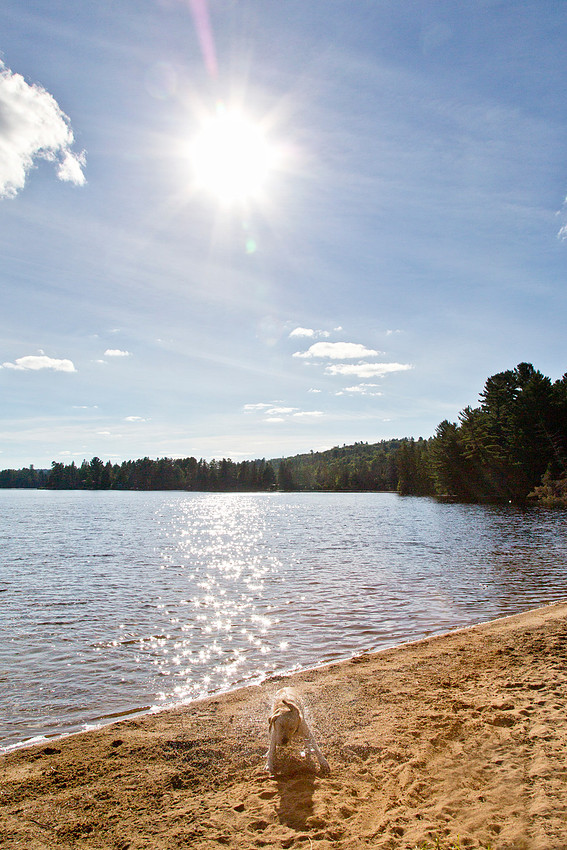
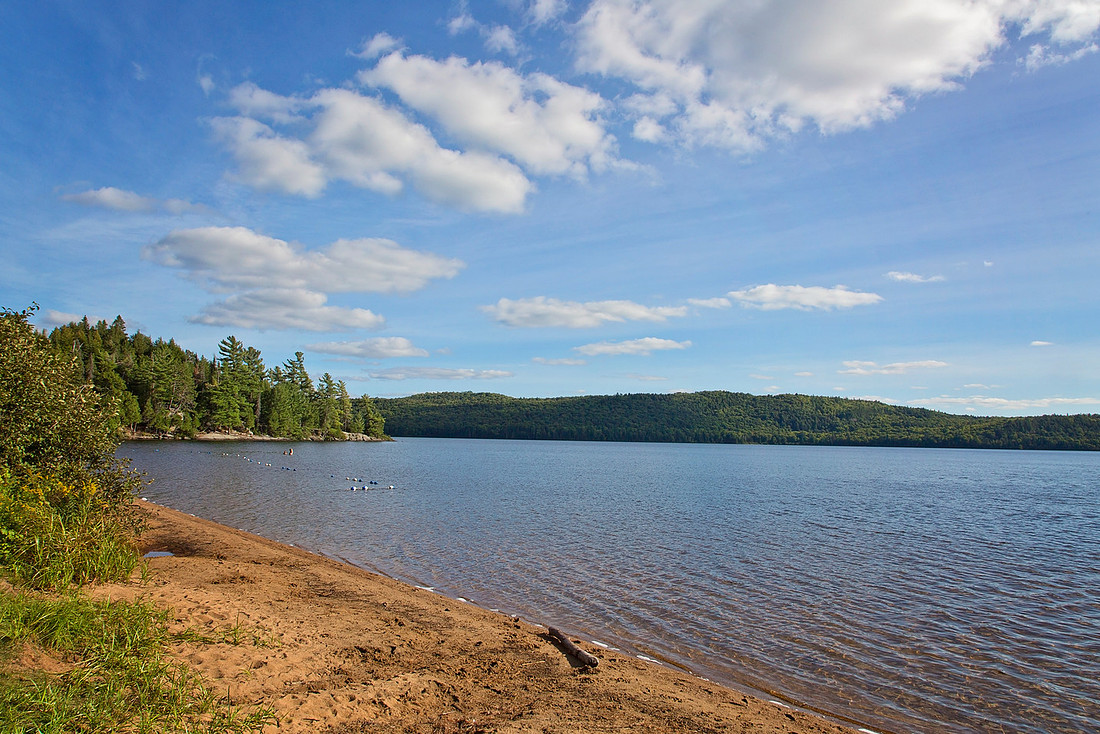
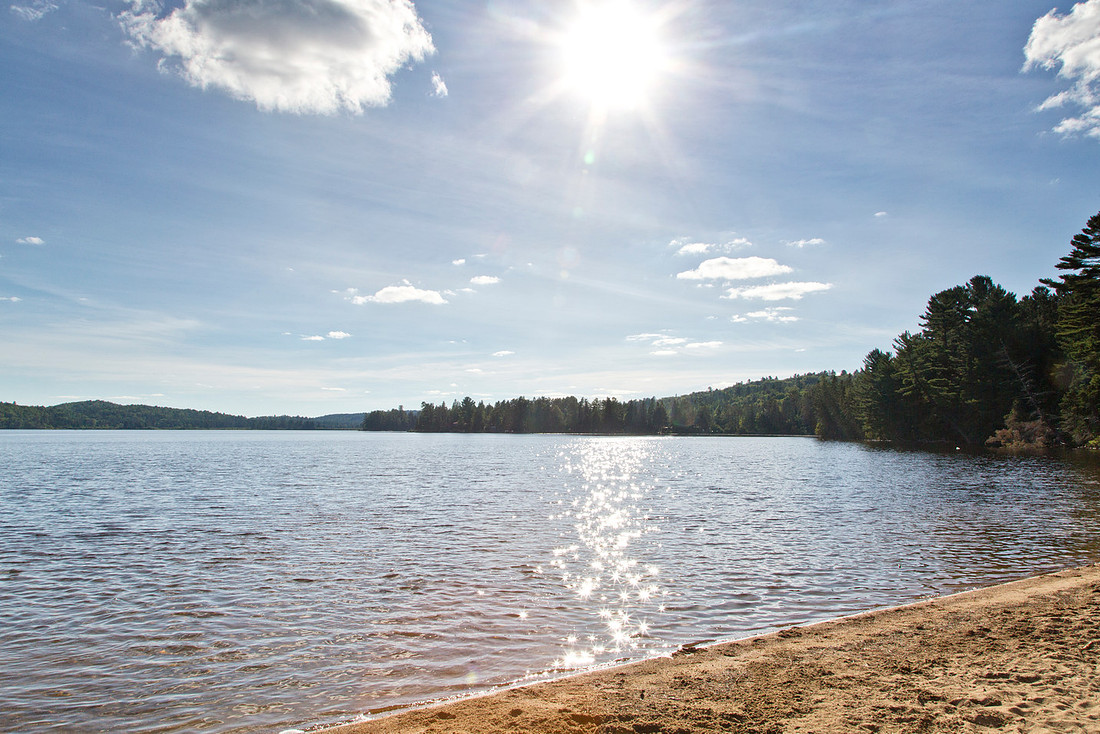
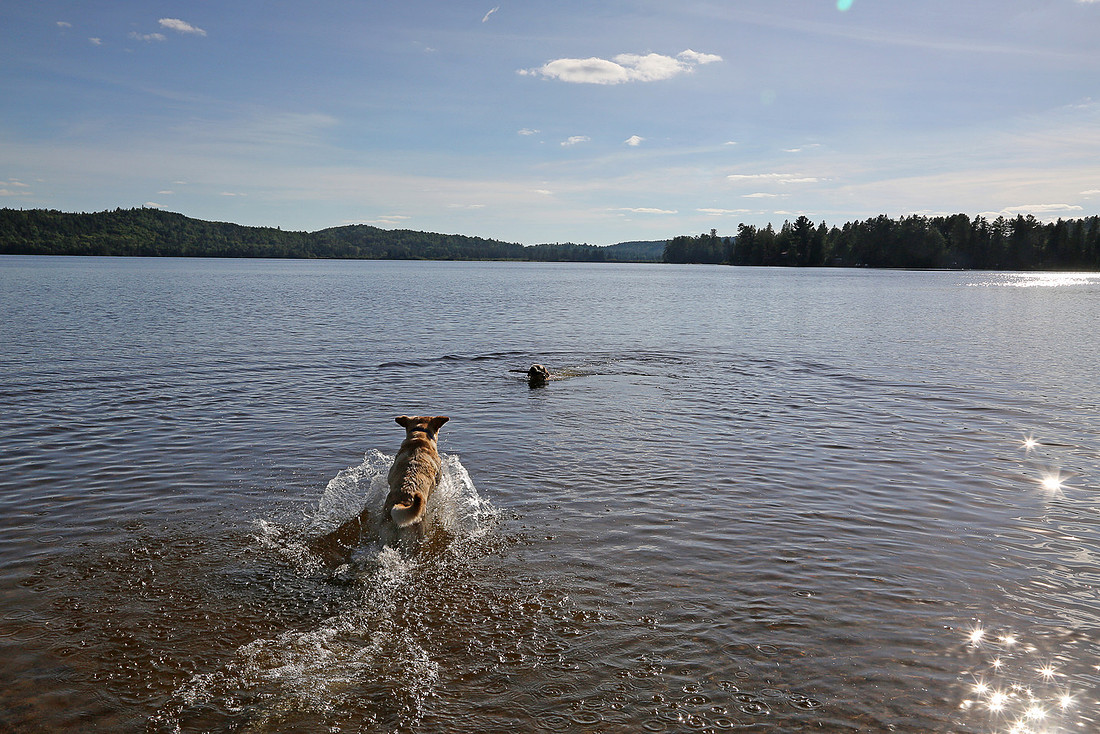
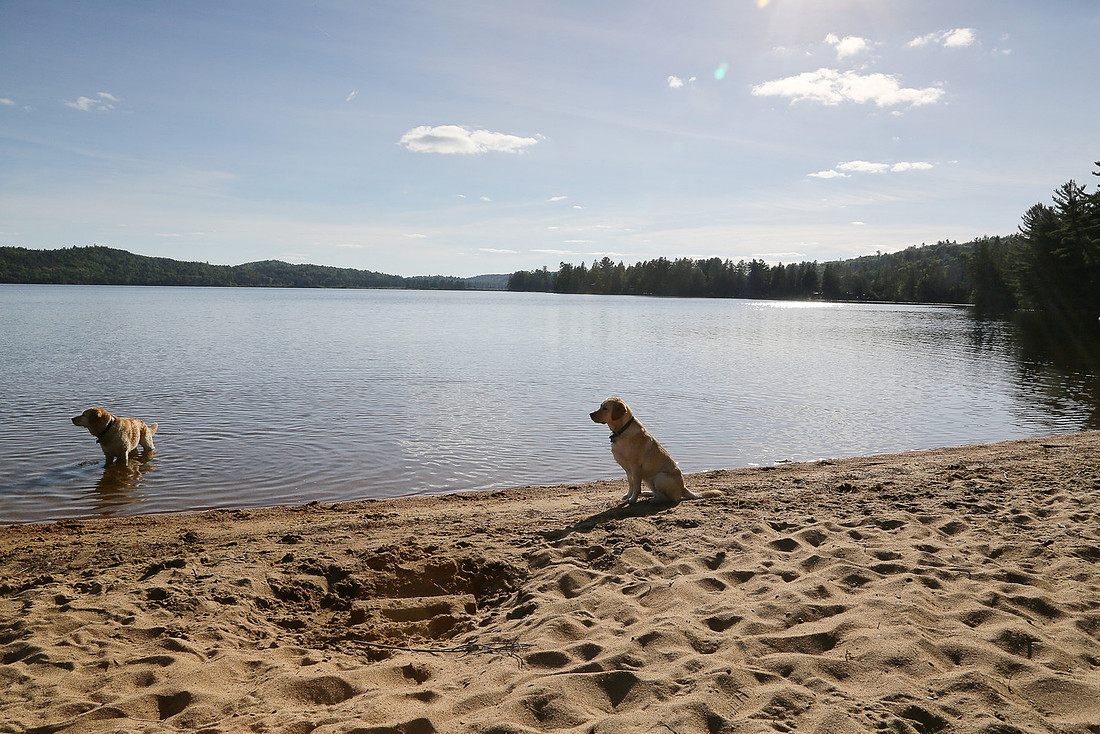
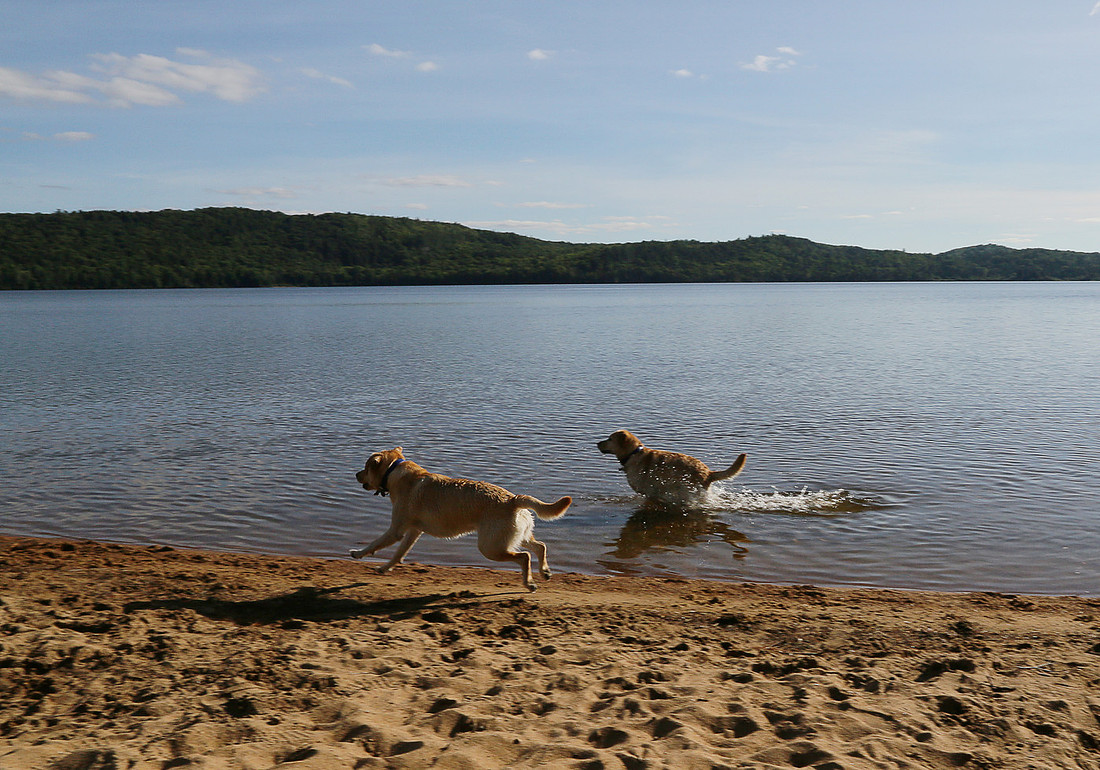
And back to our own journey. It was long, and unremarkable for the most part. We found a new route that allows us to bypass Ottawa and its traffic, while taking us through the lovely Parc de la Gatineau. I made Tim stop at a favourite place of mine, Lake of Two Rivers, in Algonquin Park, where the dogs had a swim to cap off their little holiday.
Soleil and Arwen's excellent adventure - day 3
Marathon day.
The eve of the marathon, I consulted sixteen different weather forecasts to try to determine a consensus as to when the predicted rain would come in. The general trend was for the possibility of showers increasing as the morning wore on, with rain more and more likely beyond noon. That was ok, since the marathon began at 7:30 am. It was also going to be relatively warm (for a marathon), with temperatures consistently in the early 20 degrees celsius, and high humidity.
I'd laid out my clothes based on that forecast, and put together a little bag with what I needed for the bus: a bit of pre-race food, a bottle of water, my energy gels and electrolyte tablets I'd carry with me, and a dollar-store rain poncho, just in case.
When the alarm went at 4:15, the first thing I did (well the second, after giving the dogs their ''breakfast''. Because priorities.) was to check the forecast again, and guess what, it was already raining, and this first round of rain would clear out by 7am. Great. Standing around at the marathon start in the rain. So the poncho went on before I even left the room. We also had a brief scrabble round in the dark to find my socks, because Arwen sees socks and immediately has to kidnap them and take them back to her designated Smaug-lair, which is usually entertaining, but not so much in the pre-dawn hours when I need to catch a bus.
I walked down to the old port, where the marathon finish line is, and got on a waiting school bus, along with a far-too-jovial-for-this-hour-in-the-morning crowd of mostly French-speaking marathoners.
Interesting sidebar: most marathons these days have at least an equal amount of women to men participating. Not this one. I don't know why, but of the 1300 marathon runners, only 300 or so were women and the rest were men.
Off we went on the bus, and I spent a good part of the drive nervously observing how frequently the driver was activating his wipers. Fortunately, the rain seemed to be very light and sporadic. I also looked out the window to get an idea of the last 15 or so kilometres of the course, since our route to the start line followed the marathon route until we picked up the highway on the other side of the Saint Lawrence.
This marathon is small (compare the 1 300 participants to the nearly 40 000 at Boston, New York or London), but really well done. It also includes a half-marathon and a 10k, and all three races follow the same course; the start lines for the half and the 10k are those respective distances along the course from the finish line. All participants are bused out to their respective start lines and make their way back on foot.
For the marathon, the start line was the parking lot of a very nondescript cluster of big-box stores in the city of Lévis, which sits across the river from Québec City. I found a curb at the edge of the lot and parked myself there, and used my rain poncho as a little tent to cover myself. And then it was a case of killing time: we'd arrived at the start at 5:45, and the gun would go off at 7:30. At 6:30, I got up and played line-up-for-the-porta-potty...I did this three successive times, getting back into the end of a different line as soon as I exited the facilities. Not so much because I had to go, but more as a practical way to kill time. All the while listening to the PA system, which was an ''interesting'' playlist of mediocre French pop music and Bruno Mars.
The race has ''pace bunnies'' who wear caps with rabbit ears on them, and they hold a sign up indicating the various times at which they intend to complete the race. These are experienced marathoners who volunteer their time to help pace others, and they are able to maintain a consistent cadence to reach specific time goals. I kept my eye on Mr. 3:30. He decided to disappear into the (by then very long) porta-potty lineup with just 15 minutes before start time. I got into the crowd of people at the start, and at the last few seconds before go time, Mr. 3:30 jumped into the crowd several metres ahead of me.
The horn went off (and more Bruno Mars), and we began running. Mr. 3:30 took off like a bat out of hell, and I thought the better of trying to hang onto him, because my twangy hamstring was already griping about having to run. I dialogued with it and ordered it to shut up, and within the first kilometre it did subside into a muttering aggravation.
The first few kilometres were nothing to write home about: a commercial area with lots of gas stations and fast food restaurants. But then, oh my, at 7 or 8 km we hooked off the main road and into a lovely residential area, then onto a bike path that took a gentle slope, right down to the edge of the Saint Lawrence, with views over to Québec City (and to my horror, the Île d'Orléans, just off to my right, where we'd driven the day before...a long, long trip in the car).
This marathon is interesting in that the kilometre markers count down rather than up, so that was definitely an adjustment, but I have to say that I'd prefer this approach in other marathons. It's nicer to know how much further to go without having to do the math.
Just after we hit the bike path, I was sort of finding my stride (my legs didn't have a whole lot of energy in them, and when you run a marathon, sometimes you have endless energy and sometimes you don't, and you just have to kind of roll with what shows up). My catchphrase for the entire run was ''Find your stride and enjoy the ride'', and the scenery was indeed beautiful. Even better, I realized that I'd hunted down and was passing Mr 3:30 and his rather large gang of disciples. Tant mieux. I'd checked my watch any number of times and I had been clicking off 5 minute kilometres, which is a 3:30 marathon, so I wasn't going to get sucked into whatever weird cadence Mr 3:30 was practicing.
Inevitably, the middle third of the marathon seems endless and demoralizing. There is still so far to go. I mis-aimed my on the run slurp of Gatorade and threw it in my eyes instead. Twice. And my hamstring was mounting a revolt. I considered giving up a few times (I always do, in any marathon, and never have. It's just part of the experience). But then Mr. 3:30 and his horde caught me again at about 15km and went sailing past me...this time I gave chase, and for a few kilometres I wondered if his pace was the one that was ragged, or was it mine? At 19km we began a pretty steep, 3km climb, taking us back from river level to the highway that would take us across the bridge over the Saint Lawrence. That was the last I saw of Mr. 3:30. I hit the half-marathon mark at 1:43, on pace for a 3:26 finish, and he was to hell and gone ahead of me at that point.
The bridge was really cool...over a kilometre long, and sailing high, high over the majestic Saint Lawrence River. By the time we crossed it, we were at the 30km mark, so just 12km to go, and my watch read 2:30, so the math said that maintaining pace at 5 minutes per kilometre would get me to the finish line at 3:30.
Then came the 2km steep, continuous downhill from the bridge to the river. That was when the mind began incantations of ''make it stop'' then ''kill me now''. Those 2km completely undid me. The last 12km were what is referred to as a ''death march'', progressively slower and more painful. There was walking involved. My mind went to hell as well. I remember looking down any number of times at the energy gel I had clutched in my hand, and thinking ''you should eat that''. Then doing nothing about it. I also had an empty water cup in the other hand for at least a kilometre or two.
Thankfully, there were people along the edge of the course, shouting encouragement. Some of these were spectators, yelling ''ne lâchez pas'' (don't give up) or ''Allez, allez, vous êtes presque là'' (Go, Go, you're almost there). Some of these people were runners who had finished the half marathon or 10k and were running back along the course to cheer others on. So different from the Toronto marathons I have run, where the people in the city hate every aspect of the race because it inconveniences their driving (at 7 o'clock on a Sunday morning). I've witnessed cars driving on the marathon course, or across it, despite police controls. Anyway, I digress. Thank you, Québec City, for not being like Toronto.
My watch read 3:21 when I was 2.5 kilometres from the finish line. It took me 20 minutes to ''run'' the last couple of kilometres. I could have walked them almost as fast. It was painful and tough and I really, really, really wanted to give up, but having run so far and being that close to a Boston qualification, the body found reserves it didn't know it had, and I stumbled along to the finish line.
And then it was done. I was handed water and food and a big shiny medal, then I got to climb back up from Lower Town to Upper Town, and then up the stairs to our hotel room (no elevator) and be licked clean of salt and sugar (gatorade) by the dogs.
I decided to try to stay as (gently) active as possible in the afternoon (all of this was said and done before the clock even hit noon), so Tim and I walked around the city, and even climbed back down to Lower Town. We bought a painting in the rue du Trésor. We took the dogs for a walk and perused menus outside various restaurants, settled on one, brought the dogs back to the hotel, and went back to the restaurant for a nice meal. After telling us his life story, the owner gave Tim a big Italian kiss on the cheek as we left.
Quite the day.
And that, boys and girls, is probably more than you ever wanted to know about running a marathon.
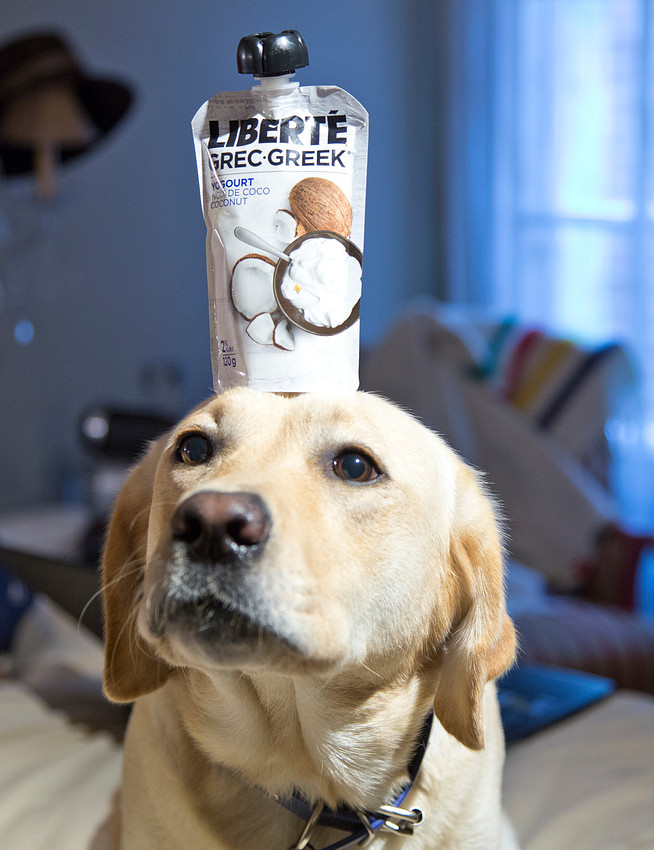
Arwen modelling some of my post-race snack bag:
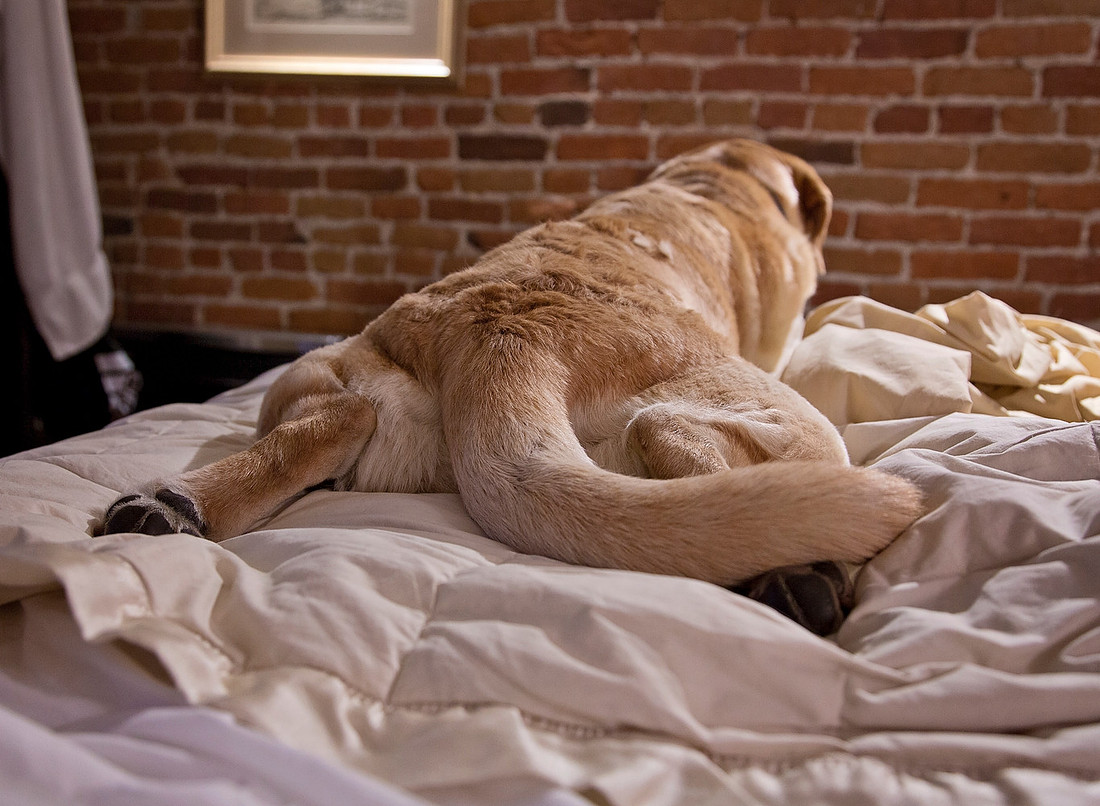
my view for the first hour back at the hotel:
Heading to Lower Town:
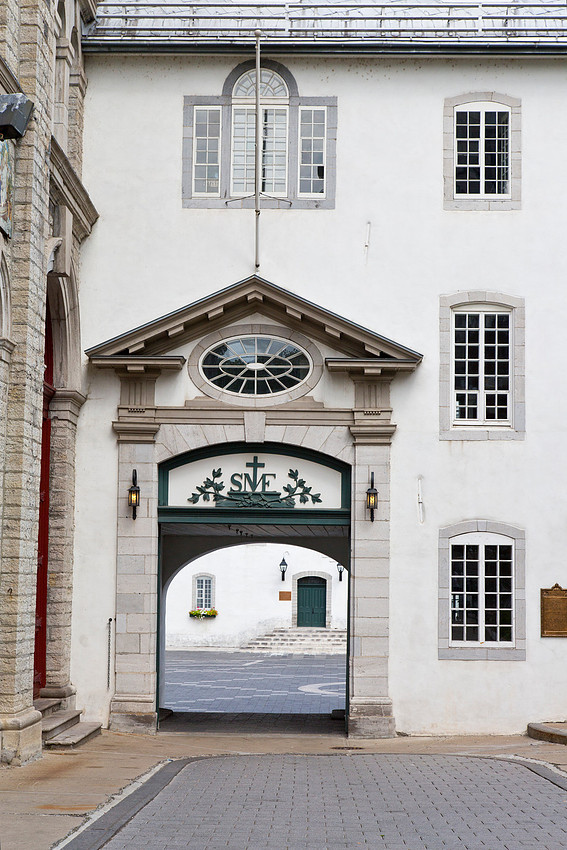
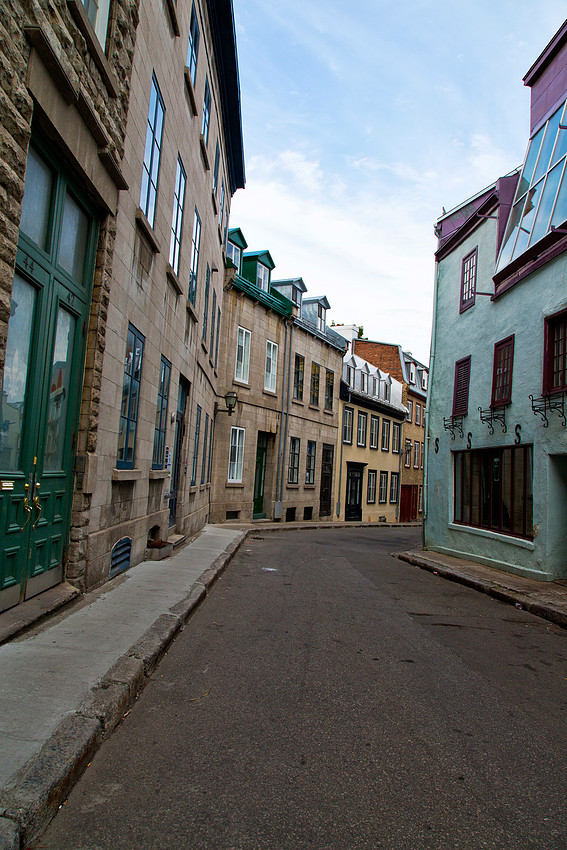
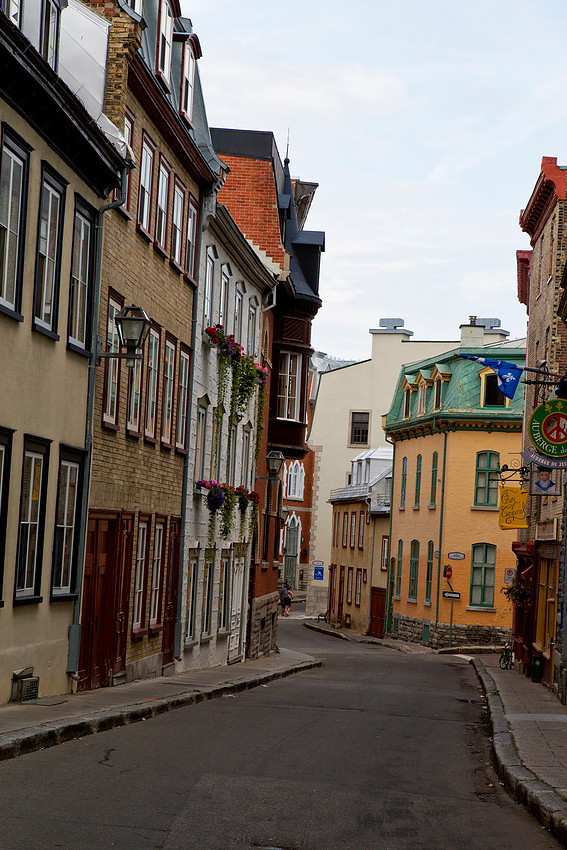
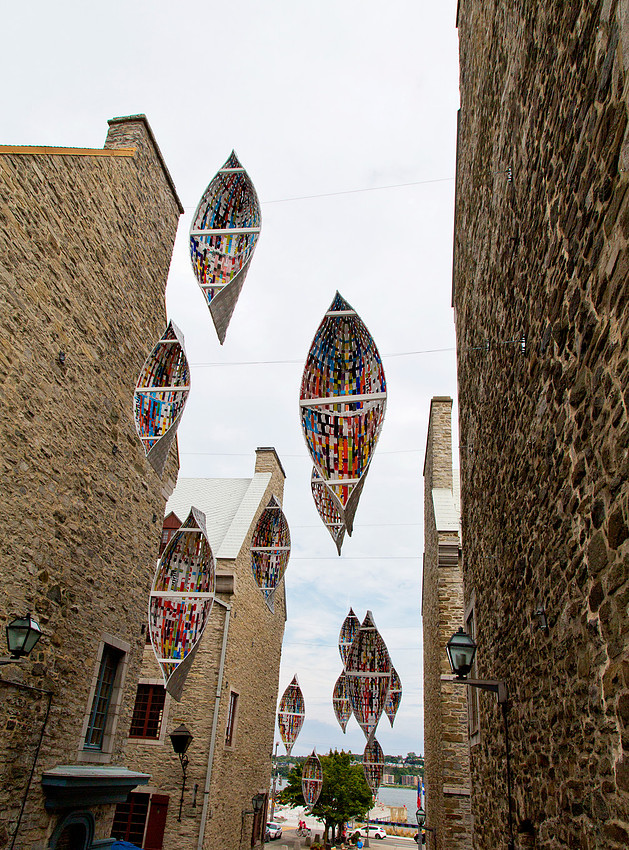
Beautiful art installation in Lower Town:
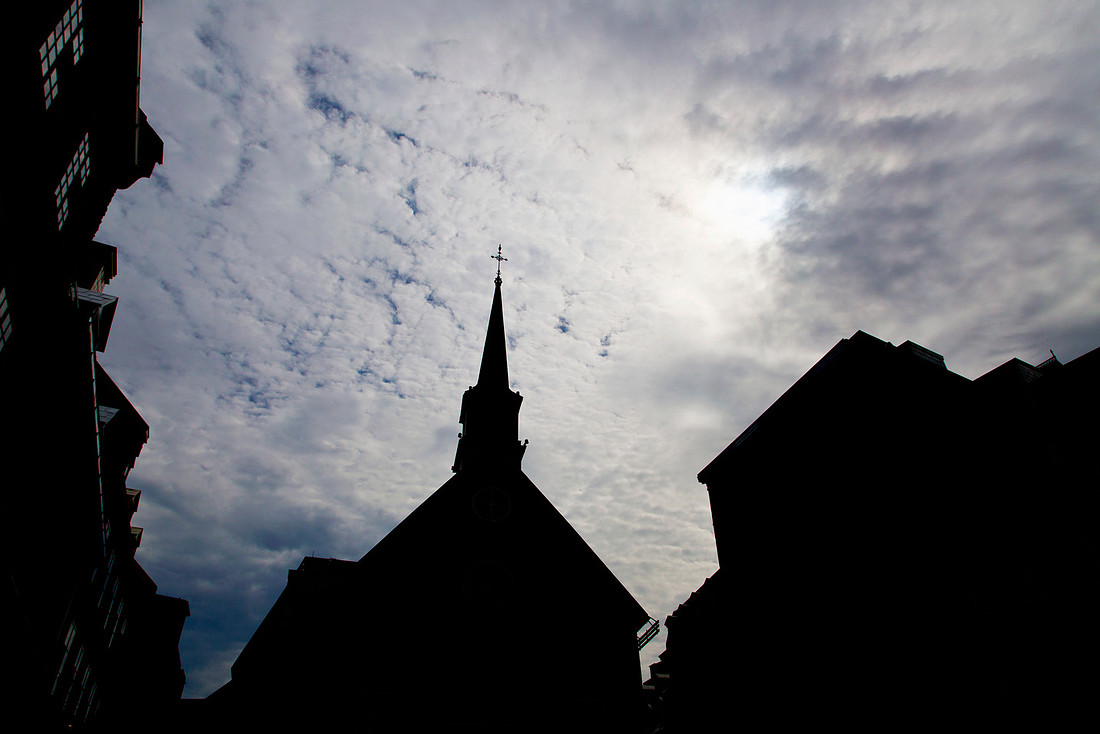
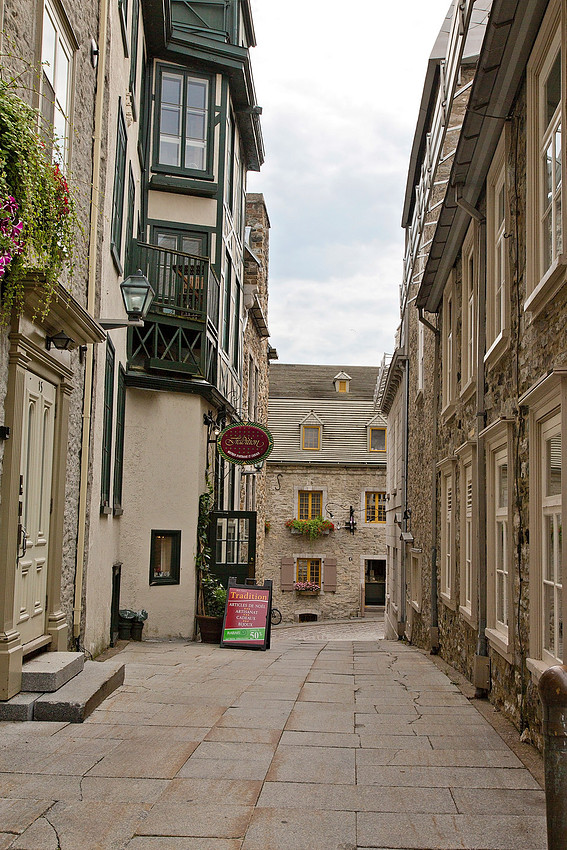
This was the view in the final kilometre of the marathon, if you weren't too tired to look:
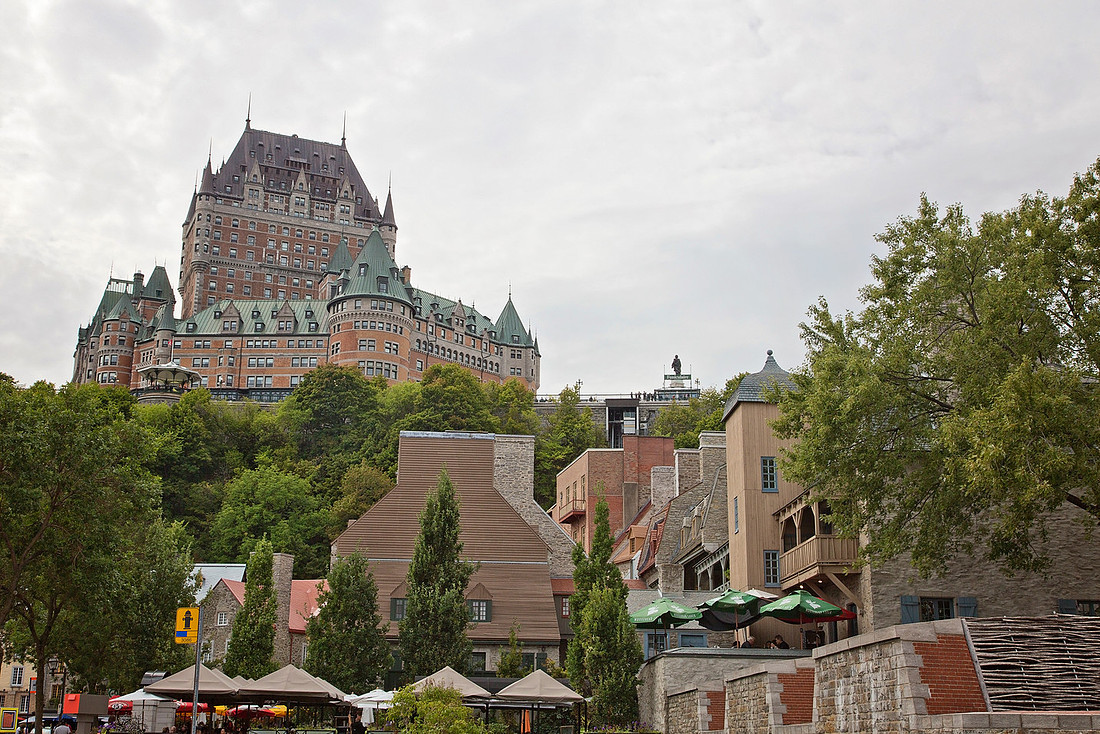
Soleil and Arwen in the Château Frontenac courtyard (the big hotel in the picture above)