Mail Run
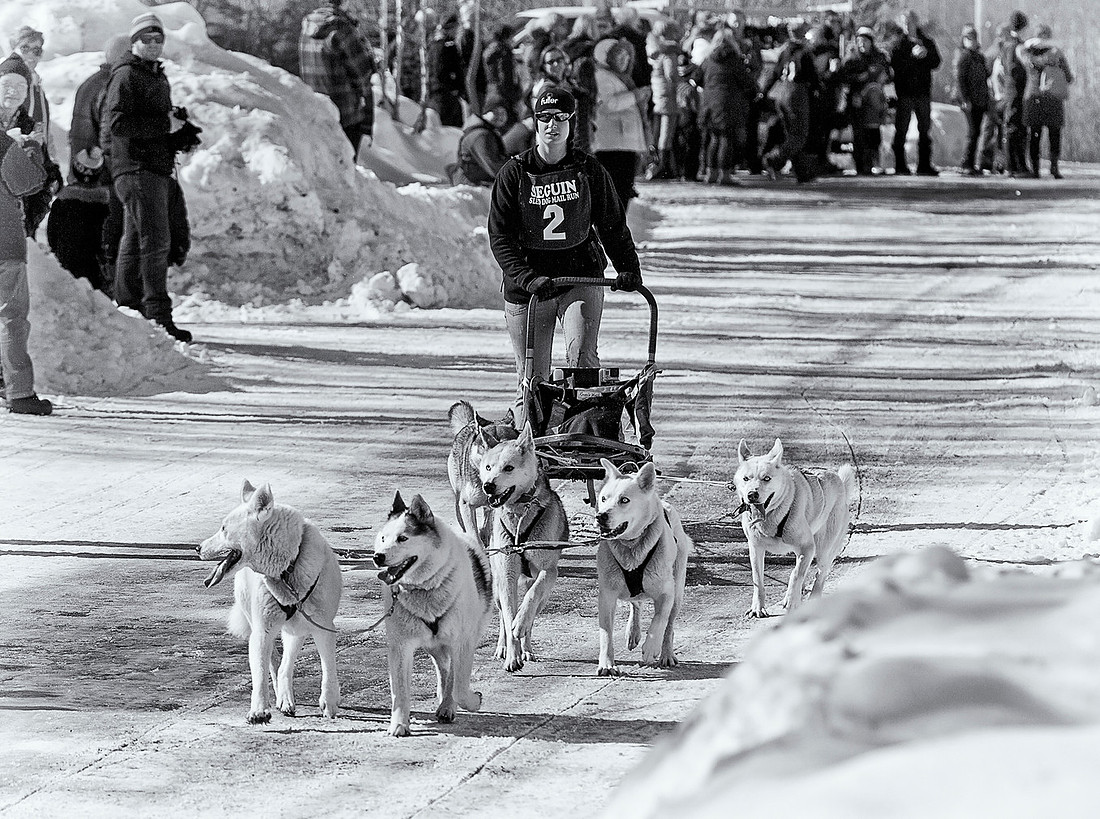
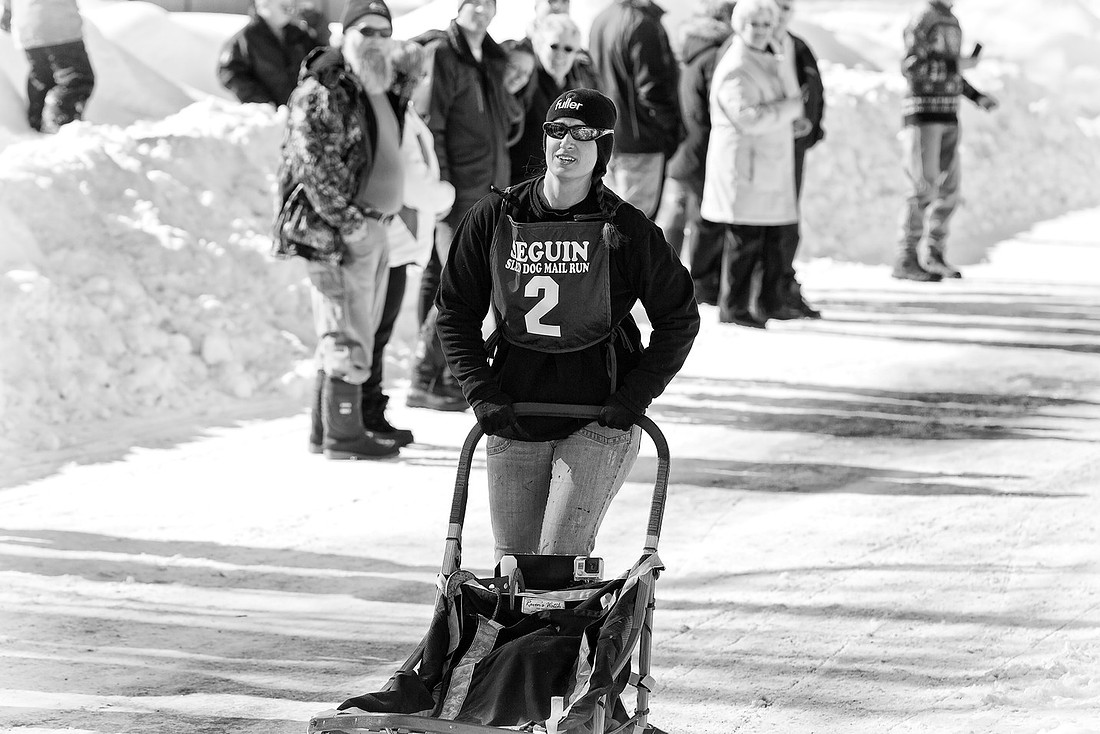
Every winter, on the Family Day long holiday weekend, our little village is the finish line for a friendly race across ice and snow, by dogsled teams carrying bags of mail, which are then delivered safely into the hands of Canada Post. Today was the day, and a very large crowd came out thanks to the suddenly spring-like weather. Last year's event took place in bitter -40 Celsius temperatures. Today we hit nearly 10 Celsius. Plus ten. So a difference of almost 50 degrees Celsius from one year to the next. Here are just a few photos from the day. More to come in future blog entries this week. It goes without saying that I have a ton of them to edit. The huge snow banks came in useful, since I was able to climb atop one of them and lean against a utility pole to take my pictures as the teams came in to the finish line.


Snowtistics
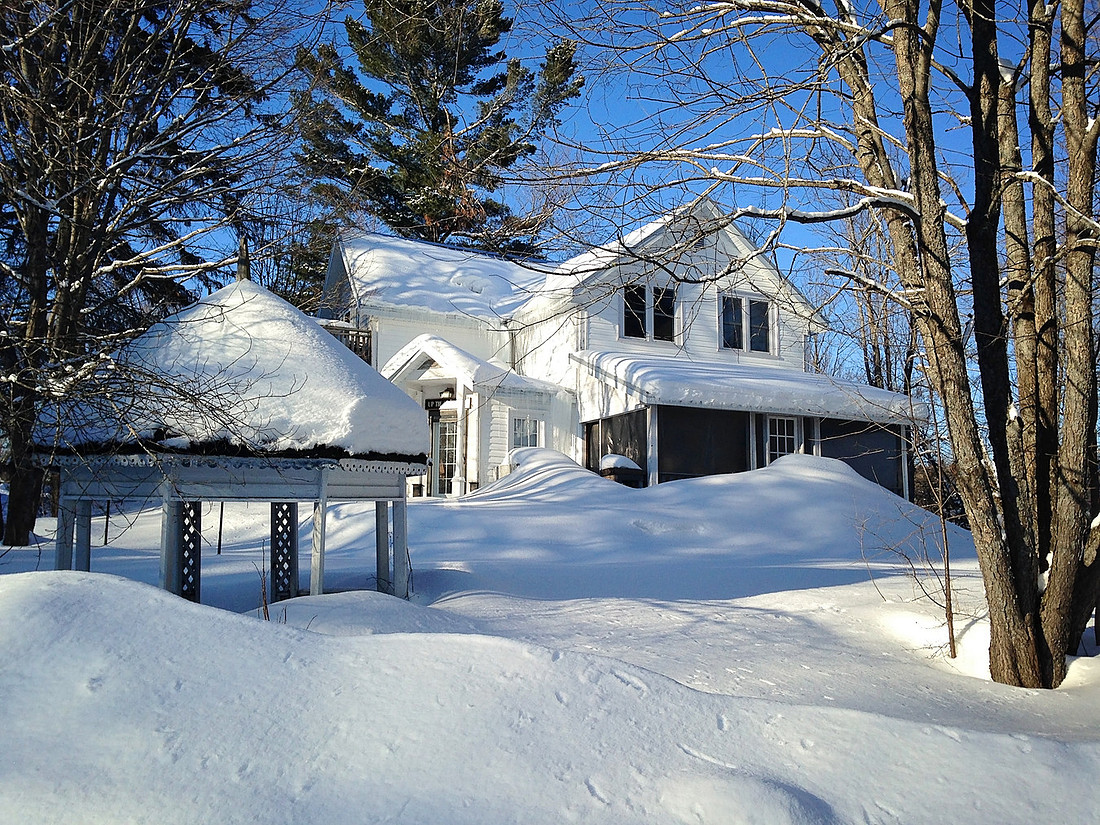
We've all been saying that it seems to have been a very snowy winter, and the statistics are now available to corroborate it.
In an average winter, this area gets a snowfall of 340 centimetres/134 inches/11 feet.
So far, we have had 375 centimetres/148 inches/12 and a half feet.
Normally, at this point in the winter, we should have had 281 centimetres/111 inches/9 and a half feet.
On average, we can expect 40-80 more centimetres/16 to 32 inches before this winter is done.
The record is 2007-2008, which saw 525 centimetres/205 inches/17 feet of snow. We may not reach that, but we're certainly flush with the white stuff.
This is a friend's house here in the village; photo taken yesterday.
Stuart McLean
Who? you ask.
Stuart McLean is an author and radio host here in Canada. Or he was. He passed away yesterday, all to young, from melanoma at age 68.
He's a writer whom I grew up reading. His Vinyl Café series is a whimsy series of ongoing anecdotes about Dave and Morley, two ordinary Canadians, living their ordinary life. It's enchanting and uplifting and it has a voice that speaks to the heart of our Country.
Below, a passage about a visit to the Parliament Buildings in Ottawa. It's a long passage, but I exhort you to read it to the end. It's a balm against the cynicism and darkness that are so rampant these days:
If you have never been to the Parliament Buildings, the best way to walk into the Centre Block is to imagine yourself walking into a cathedral. It is all limestone marble and gothic arches, bathed in the soft light of a setting sun, or as the parliamentarians would have us believe, I am certain, an approaching dawn. You wouldn’t be surprised as you walked around to spot a red-cloaked bishop padding down one of the corridors, or I wouldn’t. Like one of Canada’s grand railway hotels, Parliament is all history and tradition.
I wandered into the Centre Block, into the Rotunda, and then down the Hall of Honour heading to the Library of Parliament.
Before I got there, however, I was drawn to another corridor – one that the public isn’t supposed to use. It is reserved for members who want to slip out the back door of Parliament when they are trying to avoid people like me. And there, tucked away in a small alcove, I stumbled on a sculpture, a small bust by the great French artist and father of modern sculpture Auguste Renoir.
To Canada, read the plaque on the pedestal, whose sons shed their blood to safeguard world freedom.
The plaque is signed, from grateful France.
I am moved by grand gestures made with modesty. By small, determined things.
On I went, and soon enough came to the library, where Irene Brown, the librarian on duty, told me with obvious disappointment that the cake I had been sent to see had begun to crumble and was no longer on display. The inkwell was gone too. It was in storage.
Irene was soon joined by her colleague, a librarian named Louis, and with the spontaneous enthusiasm typical of librarians everywhere, they soon enough had set aside their work and joined me in mine.
‘We could show you our favourite book,’ said Irene.
‘What book is that?’ I asked.
‘It was sent to Canada by Queen Victoria,’ said Irene. ‘After the death of her husband.’
‘Yes,’ says Louis. ‘It is a collection of the Prince Consort’s speeches. It is inscribed in the Queen’s hand.’
‘What does the inscription say?’ I asked.
‘To the library of Parliament,’ said Louis.
‘From a heartbroken widow,’ added Irene.
I passed a pleasant hour in the library before saying by goodbyes and continuing my wanderings.
I headed up to the top floor, the sixth floor, to the parliamentary restaurant, which I have always wanted to see. The maitre d’, a woman named Margueritte, welcomed me just as graciously as the librarians had.
‘That table there,’ she said, pointing at an alcove near the door, ‘is reserved for the prime minister. That alcove is for Conservative members, that one for Liberals, and that is where the NDP gather.’
Then, sensing my interest, she said, ‘Would you like to see the New Zealand Room?’
She took me to the back of the restaurant and into a small and elegant dining room with a table that would sit a dozen, but not one more.
‘It is paneled with wood sent by New Zealand after the Centre Block burned to the ground in 1916,’ she said.
And it was at this moment, as I stood there under the green copper roof of Parliament, in that modest dining room with its magnificent view of the Ottawa River, that I had my little epiphany.
One hundred years ago New Zealand was pretty much on the far side of the moon as far as Canada was concerned. And vice versa. Yet, in 1916 someone in New Zealand heard that our Parliament Buildings had burned to the ground, and they responded to that news in such an odd and yet peculiarly appropriate way.
They sent wood. To Canada, of all places. As if wood was something Canada was lacking. And someone here received that gift with the respect with which it was given. And those two small acts of respect had served the greater good.
And it occurred to me, as I stood there all these years later, in what is now known as the New Zealand Room, that we have lost our understanding of that sort of respect.
In its place we have developed an impulse for cynicism. Too quickly we look at our politics and our politicians as if everything was easy to figure out; as if compromises didn’t have to be made; as if you can always say exactly what you mean; as if a thoughtful person can’t reflect on something and then change his or her mind; as if the business of governing isn’t complicated.
Cynicism is an easy place to pitch a tent. And it is worth remembering, when we are tempted by that soft and undemanding clearing in the forest, that there are more noble campsites.
Parliament has been, and could still be, the best of us. And, I would put forward, it behooves us to embrace that possibility, to admit to that possibility, to own that possibility and, most importantly, to expect it. These are important days. This is an important place. We owe it many things. Our passions, our commitments, our truths and, yes, our respect. The broken-hearted QueenVictoria showed that when she signed and sent that book in the memory of her husband. Auguste Renoir showed it as he fashioned that sculpture for all of France. Those New Zealanders showed it as they bundled together their little shipment of wood. Those librarians show it as they guard that inkwell still. And so should we, each one of us, as we come together in our todays and our tomorrows, to consider, as best we can, the great questions of our times.
Valentines
I'm shamelessly cribbing something that a stranger wrote and posted today on social media. It's an ordinary yet sweet story that any one of us could possibly have lived, and it made me realize that there are in fact many good things about the human condition.
One year I went shopping over a week before Valentine's Day and picked up a 2 pound box of See's candy for my husband and then hid it in the pantry where he wouldn't find it. A few days later he was complaining about the bills and said we shouldn't give gifts and just give cards to save the money. I didn't want to admit that I had already spent the money on him and make him feel he had to buy me something as well, so I agreed with what he said wondering what to do with the special hidden box. Then I was a little upset thinking he was just trying to get out of shopping for me. So each day before Valentine's Day I ate a few pieces of the candy. The top layer was soon gone and I worked on the bottom layer. The night before Valentine's Day he presented me with a beautiful box of cologne and dusting powder in my favorite fragrance. I was shocked and started to cry. He thought it was because I was touched by his gift, but it was because I was embarrassed that I had eaten his! I went into the kitchen and dug out the mostly eaten box of candy and took it to him. I was crying as I offered it to him saying,"Here is your gift. Sorry I ate it!" He opened the box to find six pieces at the bottom of the two pound box. He was delighted and sat back to slowly devour them. He made a big issue out of it as I sat with regret. He is in a nursing home these days. The other day he asked about See's candy and asked me to get him a few pieces if I went by a store. He does not know that I had purchased a box for us to share when I visit him and we celebrate our 50th Valentine's Day together!